

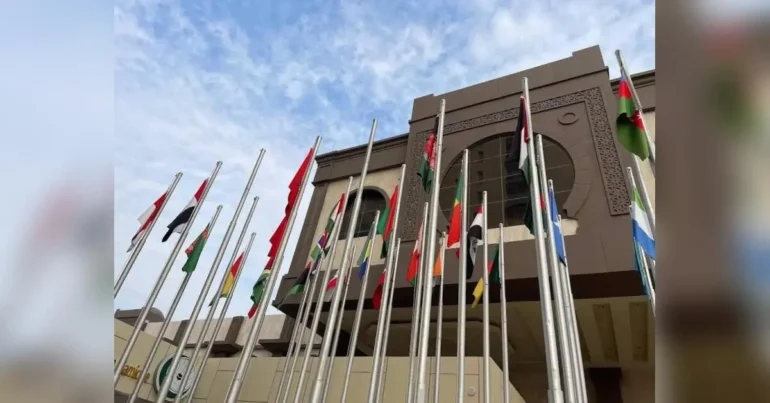

KABUL, AFGHANISTAN – The ninth meeting of ministers of the Organization of Islamic Cooperation (OIC) responsible for women’s affairs will be held in Pakistan tomorrow (Sunday, July 12).
Pakistan’s Ministry of Foreign Affairs said that the two-day meeting will continue in Islamabad.
Pakistan’s Ministry of Human Rights said that 190 representatives from 57 member states of the OIC will participate in the meeting.
The purpose of the meeting is described as “defending rights, strengthening political and economic participation, and supporting the empowerment and inclusion of women in the digital world.”
Representatives from Islamic countries are expected to discuss “ways to increase women’s political and professional participation, expand their access to economic resources and financial services, and reduce the gender gap in the field of technology.”
In a message posted by Pakistan’s Ministry of Human Rights on Facebook, the three-colored flag of Afghanistan was also seen among the flags of participating countries.
However, the Taliban have not yet commented on whether they will participate in the meeting.
Last year, Pakistan also hosted a similar gathering, but the Taliban did not attend.
The previous year’s meeting was held under the title “International Conference on Girls’ Education in Muslim Communities,” with the participation of organizations including UNICEF and UNESCO. The conference emphasized the importance of ensuring women’s and girls’ access to the right to education.
The meeting comes at a time when Women and girls in Afghanistan continue to face one of the world’s most severe systems of institutionalized discrimination under Taliban rule.
Since returning to power in August 2021, the Taliban have imposed sweeping restrictions that have excluded women from secondary and higher education, barred them from most forms of employment, severely limited their freedom of movement, and prohibited them from visiting public spaces such as parks, gyms, and many recreational facilities. Afghan women have also been largely excluded from political and public life, while women-led organizations and civil society groups have been dismantled or forced to operate underground.
Many human rights experts, UN officials, and advocacy groups have described this system of systematic discrimination and segregation as gender apartheid, arguing that it amounts to the deliberate institutionalization of women’s exclusion from society.
The restrictions have also had profound humanitarian and health consequences. Women and girls face significant barriers to accessing healthcare, particularly in rural areas, where shortages of female health professionals, restrictions on women’s movement, and the requirement in many situations to be accompanied by a male guardian limit access to essential medical services.
Mental health services are especially scarce. Years of conflict, displacement, economic hardship, and increasing social isolation have contributed to widespread psychological distress, yet access to counseling and psychosocial support remains extremely limited.
Humanitarian agencies have repeatedly warned that the exclusion of women from education, employment, and public life not only violates their fundamental rights but also undermines Afghanistan’s long-term social and economic development, leaving millions of women and girls increasingly vulnerable to poverty, poor health, and social exclusion.

