

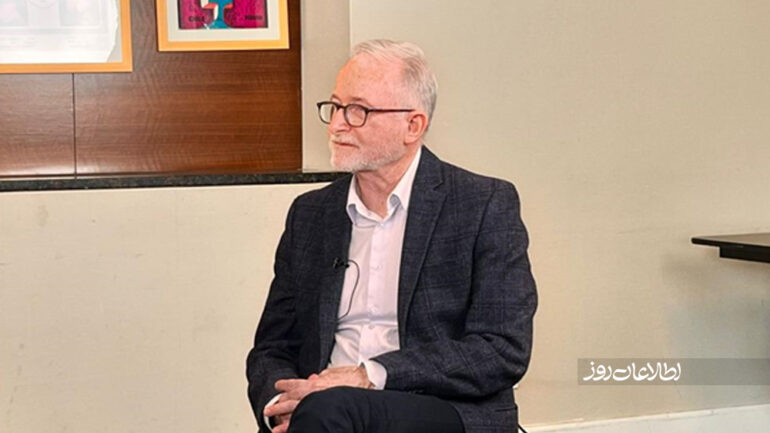

KABUL, AFGHANISTAN – Richard Bennett, the UN Special Rapporteur on the situation of human rights in Afghanistan, called on the Taliban to “immediately and unconditionally” release all detained journalists and ease restrictions on media, warning that press freedom in the country continues to deteriorate.
In a statement on Thursday ahead of World Press Freedom Day, Bennett said Taliban authorities must ensure journalists and media workers can exercise their right to freedom of expression and continue their work without fear of reprisal, harassment, or arrest.
“Since the Taliban’s return to power in August 2021, there has been an alarming erosion of press freedom across Afghanistan,” Bennett said. “Independent reporting is now severely constrained, with journalists operating in an increasingly restrictive and hostile environment.”
Since taking control, the Taliban have detained dozens of journalists and media workers, often over criticism of the group’s policies, alleged collaboration with exiled media outlets, or social media activity. According to the Afghanistan Journalists Center (AFJC), at least 34 journalists were detained in 2025 alone, with many held for days, weeks or even months before being released.
Reporters Without Borders (RSF) says at least four journalists remain in Taliban custody as of this week. Among them is Hamid Farhadi, who was arrested in September 2024 from his home in Kabul and later sentenced to two years in prison on charges of “propaganda” against the Taliban and collaboration with the Etilaatroz newspaper, an independent outlet now operating in exile. He is currently being held at Bagram prison, where political detainees are held.
Bennett highlighted the use of censorship, intrusive surveillance, and “legal” restrictions — including those under the Taliban’s so-called law on the promotion of virtue and prevention of vice — as key tools suppressing media freedom.
“A climate of fear has led to widespread self-censorship that extends beyond journalists to their sources,” he said. “Afghans who speak to the media have reportedly faced threats, surveillance, and even detention, further undermining the flow of information.”
The situation is especially dire for women journalists, who face additional barriers, including severe restrictions on movement, dress codes, access to work, and unequal treatment within newsrooms.
Bennett noted that the crackdown on press freedom forms part of a wider contraction of civic space in Afghanistan, where human rights activists, civil society members, and critics of the Taliban also face growing risks of arrest and intimidation.
Despite the challenges, Afghan journalists continue to play a key role in exposing human rights abuses and ensuring public access to information under extraordinarily difficult conditions, Bennett said, praising the resilience of those working both inside the country and in exile through hybrid reporting models.
He warned that declining international funding for independent media is further weakening the sector, limiting journalists’ ability to work safely and sustain credible reporting.
Marking World Press Freedom Day, Bennett called on the international community to show solidarity with Afghan journalists by increasing funding and technical support for independent media, both inside Afghanistan and in exile, and by establishing stronger protection mechanisms for those at risk.
“A free and independent press is not only a cornerstone of human rights, it is indispensable for Afghanistan’s future,” he added.
Afghanistan’s media environment has sharply deteriorated since the Taliban takeover. The AFJC documented 207 media rights violations during the solar year 1404 (March 2025 to March 2026), including two journalist killings, one injury, 183 threats, and 21 arrests — a rise of more than 20% compared to the previous year.
Rights groups, including Human Rights Watch and media watchdogs, have repeatedly condemned the arbitrary detentions, reports of torture, forced confessions, and the Taliban’s “single voice” policy that has transformed state-affiliated media into propaganda outlets.
The country ranked 175th out of 180 nations in Reporters Without Borders’ 2026 World Press Freedom Index, placing it among the worst countries globally for press freedom.

