

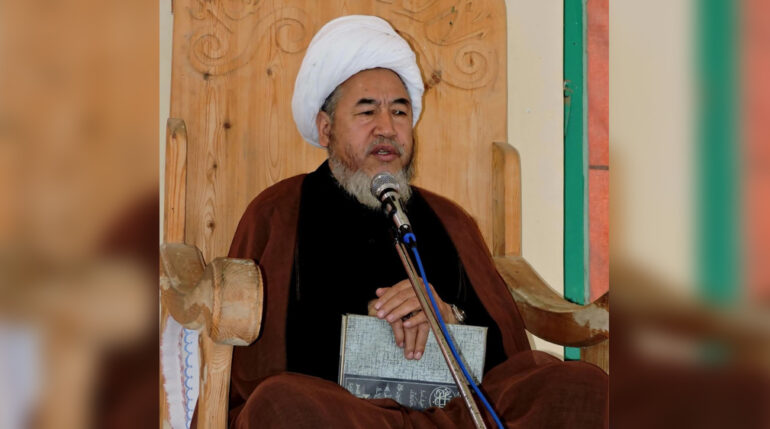

KABUL, AFGHANISTAN – Prominent Shia cleric Ayatollah Waezzada Behsudi has accused the Taliban of intensifying pressure on Afghanistan’s Shia community, saying restrictions have grown steadily over the past five years and that followers are turning to religious scholars in tears.
Speaking during Eid al-Adha prayers in Kabul on Wednesday, Behsudi said that despite the Taliban’s claims of upholding Islamic law, pressure on Shia communities has increased day by day.
The senior Shia religious authority pointed to the growing presence of armed Kuchis (nomads) in traditional Hazara-Shia areas, including Behsud district in Maidan Wardak province. He said these armed groups have harassed, displaced, and in some cases killed local residents, but Taliban authorities have repeatedly failed to investigate or address the victims’ complaints.
“The ears of the Islamic Emirate [Taliban] are deaf when it comes to the demands of Shias,” Behsudi told worshippers.
He noted that despite nearly five years of goodwill efforts and attempts at engagement by Shia clerics, senior Taliban officials continue to refuse meetings with Shia scholars. A detailed 200-page letter sent to Taliban supreme leader Hibatullah Akhundzada more than two years ago has still received no response.
“We receive no reply to our letter, no meeting is granted, and at the same time we are told not to speak to the media,” Behsudi added.
The cleric highlighted forced religious assimilation in education. He said Shia university students are now required to pledge allegiance to the Sunni Hanafi sect or leave their studies. Documents recently obtained by KabulNow show the pledge contains 14 restrictive clauses covering dress code, appearance, religious beliefs, and social behaviour.
“They have also removed Jaafari jurisprudence from the educational curriculum,” he added. “People should not be forced to change their sect. Even if they are forced, it will achieve nothing except creating more distance, resentment, and grievances.”
Behsudi also condemned the humiliation of Shia religious leaders. He said scholars have been instructed not to speak to the media, while senior clerics are being summoned and pressured not to perform temporary marriage ceremonies.
He referred to a recent incident in western Kabul where Taliban forces detained and beat a Shia cleric for officiating the marriage of a young couple, describing it as a violation of clerical dignity.
Since returning to power in August 2021, the Taliban have imposed strict religious controls based on their rigid interpretation of Sunni Hanafi jurisprudence, which does not recognise Shia Islam as legitimate.
The group has removed Shia religious content from school curricula, heavily restricted public Shia ceremonies including annual Muharram commemorations, and carried out raids on mosques in Shia-majority provinces such as Bamiyan, Daikundi, and Herat.
Human rights groups have repeatedly expressed alarm over the Taliban’s treatment of religious minorities, particularly Shia Hazaras, who have long faced systemic discrimination and targeted violence in Afghanistan.

