

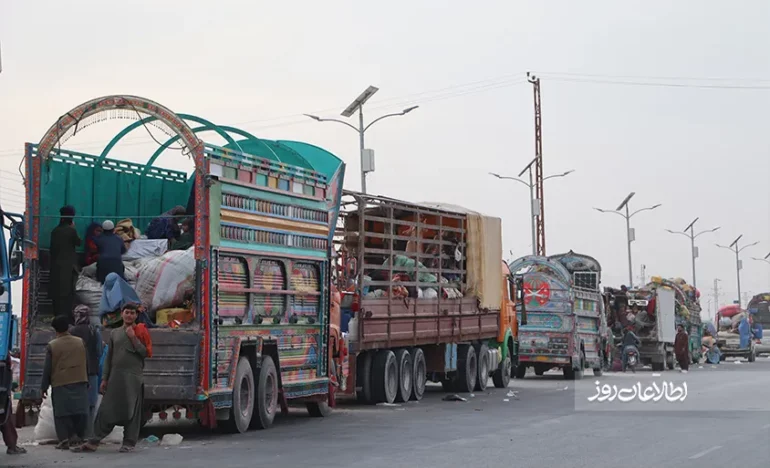

KABUL, AFGHANISTAN – The Taliban’s “Commission for Addressing Migrants’ Problems” says that yesterday (Tuesday, April 28), 4,146 migrants were deported from Pakistan and entered Afghanistan.
The commission added that on the same day, another 340 migrants were deported from Iran and returned to Afghanistan.
The Taliban’s “Commission for Addressing Migrants’ Problems” said that these individuals entered Afghanistan through the Torkham, Spin Boldak, Islam Qala, and Pul-e-Abrisham border crossings.
The commission stated that these migrants were first registered and then provided with assistance, and some of them were also transported to their respective provinces.
Afghanistan has experienced a sharp increase in returns since late 2023 as Pakistan and Iran have intensified enforcement against undocumented Afghan migrants. UN figures indicate that more than 5.4 million Afghans have returned or been deported from the two countries combined since October 2023, with around 2.9 million in 2025 alone.
Nearly 150,000 Afghans have returned from Pakistan and Iran so far in 2026, according to data from the UN refugee agency (UNHCR), adding pressure on already limited resources inside Afghanistan.
The deportations coincide with the ongoing conflict between the Taliban and Pakistan. Islamabad closed key border crossings in late February following the outbreak of the conflict, disrupting trade and travel, before reopening them in recent days primarily to facilitate deportations. Other forms of cross-border movement remain largely restricted.
Afghan migrants in Iran have also been affected by the ongoing conflict between the country and the United States and Israel. Local reports indicate that six members of an Afghan family were killed when a strike hit their home in Tehran’s Shahr-e Rey district. An earlier strike in Varamin, southeast of the capital, also killed an Afghan migrant. Afghan communities in Iran, many of whom have lived there for years, face increasing uncertainty as tensions persist.
The rise in returns comes as Afghanistan faces a worsening humanitarian situation. UN estimates nearly 22 million people, close to half the population, require humanitarian assistance this year, while around 4 million children are suffering from acute malnutrition.
Many returnees are families who had been living in Pakistan and Iran for years or decades and now face difficulties reintegrating into communities with limited infrastructure and economic opportunities. Humanitarian organizations warn that without sustained support, returnees could face rising poverty and displacement inside Afghanistan.
Women and girls remain subject to strict restrictions on education, employment, and other basic rights, limiting household income and access to basic services for many families.
These developments come amid growing humanitarian concerns, as aid organizations warn that the large-scale return of migrants may place additional pressure on Afghanistan’s already fragile economy and limited resources, particularly in border provinces struggling to accommodate the influx of returnees.

