

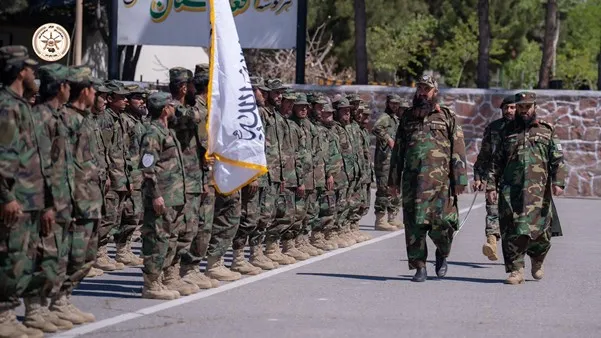

The United Nations Security Council’s Sanctions Monitoring Team has said that the Taliban have dismissed around 4,000 lower-ranking commander and officers following an order by the group’s leader, Hibatullah Akhundzada, to reduce its forces by 20 percent.
According to the Monitoring Team’s latest report to the UN Security Council, about 1,000 of those dismissed were from Badakhshan province alone.
The report said that after Badakhshan, the highest number of dismissals occurred in other northern provinces, including Kapisa, Parwan and Takhar.
The Monitoring Team noted that Afghanistan’s complex economic situation has made it difficult for the Taliban to pay salaries to their security forces, creating security-related consequences for the group.
According to the report, Hibatullah Akhundzada, who is based in Kandahar, has largely pushed forward the force reductions against the wishes of the Taliban’s ministries of defense and interior, as well as the group’s General Directorate of Intelligence in Kabul.
The committee estimated the total number of Taliban forces to be between 380,000 and 450,000. This includes around 150,000 soldiers and approximately 200,000 police and intelligence personnel.
The report said that due to budget shortages, the Taliban reduced their administrative structures by about 20 percent during the current solar year, dismissing thousands of employees from both civilian and military institutions.
According to available reports, the dismissals have been largely concentrated in non-Pashtun provinces and have disproportionately affected members of other ethnic groups in Afghanistan.
The Sanctions Monitoring Team also provided estimates of the Taliban’s budget. It said that in the first half of the 2025 fiscal year, the Taliban allocated 55.2 billion Afghanis to the security sector and 64.2 billion Afghanis to other sectors.
Since returning to power in Afghanistan, the Taliban have publicly announced their governing budget only once. Since then, they have not disclosed detailed figures or spending breakdowns.
The group claims that it finances its governing budget entirely through Afghanistan’s domestic revenues.

