
KABUL, AFGHANISTAN – French Foreign Minister Jean-Noël Barrot has described the Taliban’s policies towards women and girls in Afghanistan as “gender apartheid,” stressing that technical discussions between Paris and the group do not amount to approval or diplomatic recognition of the Taliban administration.
Speaking during a question-and-answer session in the French National Assembly on Tuesday, November 24, Barrot responded to criticism from Léa Balage El Mariky, a lawmaker from the Ecologists party, who questioned the government’s decision to engage in talks with the Taliban.
Barrot said France had “no intention whatsoever” of establishing diplomatic relations with the Taliban.
“Any strictly technical exchanges that may take place do not constitute approval or recognition of this regime. This regime imposes the worst form of discrimination against women and girls in our century. This is gender apartheid,” he said.
The French foreign minister added that his government was working towards the recognition of gender apartheid as a distinct crime under the forthcoming Convention on the Prevention and Punishment of Crimes Against Humanity.
His remarks came after Balage El Mariky criticised the French government’s decision to negotiate with the Taliban over the return of Afghan nationals living in France without legal residency permits, particularly those considered a threat to public order.
The lawmaker claimed that two Taliban representatives were expected to travel to France as part of the discussions and described the move as “a betrayal.”
She also called on the government to disclose the identities of the Taliban representatives and the duration of their proposed stay in France. However, Barrot did not provide further details about the reported visit.
The French foreign minister said the technical contacts were intended to facilitate the faster deportation of Afghan nationals whom French authorities consider to pose the greatest security risks.
At the same time, Barrot announced additional educational support for Afghan women and girls.
According to the foreign minister, 50 female students from Afghanistan will be transferred to France starting in January 2027. In September 2027, another 35 women will receive prestigious government scholarships. He also said France would welcome 200 Afghan women next year.
Meanwhile, criticism from Afghan citizens, anti-Taliban groups, human rights organisations and left-wing political parties in Europe has intensified amid growing engagement between European governments and the Taliban.
Two days earlier, Spain’s foreign minister also reaffirmed his country’s position, saying at a conference on Afghan women in Madrid that Spain would “never” recognise the Taliban.
On September 25, 2024, Australia, Canada, Germany and the Netherlands announced that they had formally initiated proceedings against Afghanistan under the Convention on the Elimination of All Forms of Discrimination Against Women (CEDAW), challenging the Taliban authorities over their systematic violations of women’s rights.
The four countries argued that the Taliban’s restrictions on women and girls violated Afghanistan’s obligations under the international convention, to which Afghanistan is a state party.
The move marked an important step towards holding the Taliban accountable through international legal mechanisms and demonstrated that Afghanistan’s obligations under international human rights treaties remain in force despite the Taliban’s return to power.
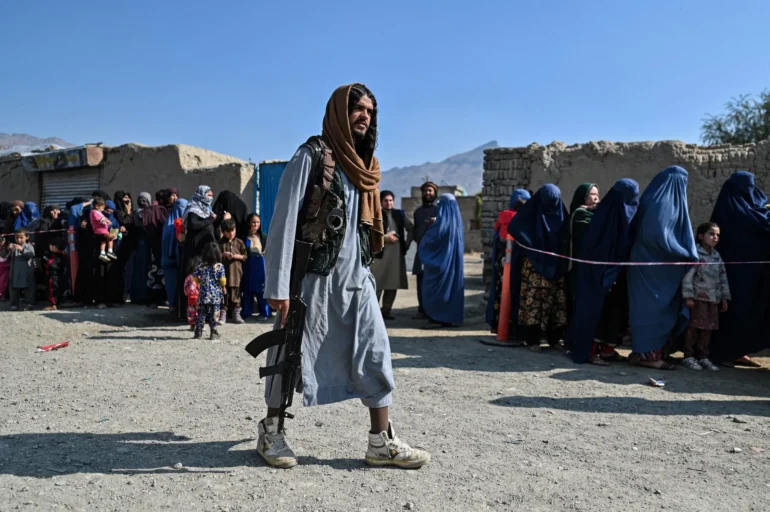
Since August 2021, the Taliban have barred girls from secondary education and women from universities, restricted women’s employment, movement and participation in public life, and imposed increasingly severe restrictions on their fundamental rights.
The term gender apartheid has increasingly been used by Afghan women’s rights activists and international human rights organisations to describe this institutionalised system of discrimination and exclusion. However, it has not yet been formally recognised as a separate crime under international law.