

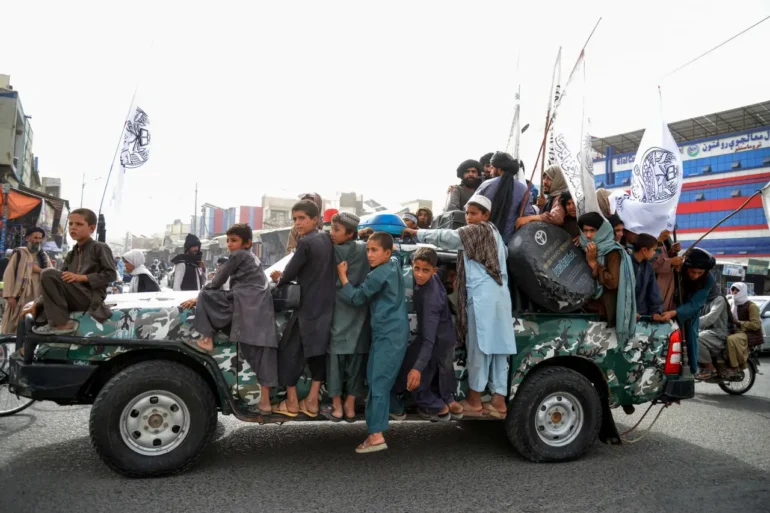

KABUL, AFGHANISTAN – The United Nations has reported an 81 percent increase in the recruitment and use of children by Taliban forces in Afghanistan over three years, documenting 557 boys, some as young as 12, recruited between January 2023 and December 2025.
In its latest report, titled “Children and Armed Conflict in Afghanistan,” the UN Secretary-General said that 4,582 grave violations against children were verified during the reporting period, affecting 1,993 children, including 1,658 boys, 324 girls and 11 children whose sex was unknown.
The report, published on September 10, 2026, covers six categories of grave violations: the recruitment and use of children, killing and maiming, rape and other forms of sexual violence, attacks on schools and hospitals, abduction, and the denial of humanitarian access.
Although the total number of verified violations declined by 38 percent compared with the preceding three-year period, the report highlighted a sharp rise in the recruitment of children and the denial of humanitarian assistance. The UN cautioned that the figures do not represent the full extent of violations in Afghanistan because of monitoring constraints and reduced funding.
The Taliban were attributed responsibility for 3,180 of the verified violations, while 1,202 were attributed to unidentified perpetrators. The Islamic State in Iraq and the Levant-Khorasan Province (ISIL-K) was responsible for 30 cases, the National Resistance Front for seven and the Afghanistan Freedom Front for one. A further 162 violations were attributed to Pakistani armed forces.
The southern region recorded the highest number of verified violations, with 1,023 cases, followed by the northern region with 718 and the western region with 647.
According to the report, all 557 verified cases of recruitment and use of children involved Taliban forces. Of these, 342 children were recruited in 2023, 11 in 2024 and 204 in 2025.
The UN said the sharp decline in recorded cases in 2024 was partly attributable to victims’ and families’ concerns about their safety, which contributed to underreporting. The subsequent increase in 2025 followed local engagement by the UN with the Taliban concerning the release of children from their ranks.
The report found that 341 boys were used in support roles, while 216 were used in both combat and support roles. Recruitment methods included persuasion by local leaders, relatives or parents in 185 cases, while the method was unknown in 372 cases.
Poverty remained a key factor contributing to the recruitment and use of children amid Afghanistan’s continuing economic crisis.
The findings raise concerns about the continued recruitment of minors despite measures announced by Taliban authorities to prohibit the practice. The report noted that the Taliban leader issued a decree in March 2022 banning the recruitment of children into security institutions, followed by a Defence Ministry decree in May 2022 prohibiting minors from joining the Taliban army. A commission was also announced in October 2022 to facilitate the demobilisation of children.
However, the UN said recruitment and use of children in combat and non-combat roles continued within Taliban security forces.
The report called on the Taliban to immediately release children from their ranks, formally define a child as every person under the age of 18, introduce internationally recognised age-assessment procedures and establish child-protection units at recruitment centres.
The UN also verified that 31 children, including 29 boys and two girls aged between 11 and 17, had been detained by the Taliban in 2023 on national security-related charges or for alleged association with ISIL-K and the National Resistance Front. The organisation said it could not verify detention cases in 2024 and 2025 because of restricted access to children held in detention facilities and juvenile rehabilitation centres.
The report further documented the killing and maiming of 1,415 children during the three-year period, including 446 killed and 969 injured or otherwise maimed. The victims comprised 1,094 boys, 310 girls and 11 children whose sex was unknown.
Child casualties declined from 482 in 2023 to 390 in 2025, following an increase to 543 in 2024. Nevertheless, unexploded ordnance and other explosive remnants of war remained the leading cause of death and injury, accounting for 1,128 cases, or approximately 80 percent of all verified child casualties.
Cross-border shelling and airstrikes by Pakistani armed forces accounted for another 159 child casualties. Other causes included gunfire, physical assaults, command-initiated improvised explosive devices and hand grenades.
The UN warned that children remain particularly vulnerable because many live, play or work in areas contaminated by explosive remnants of war. Some families have returned to previously inaccessible areas or settled in uncleared locations, while children may collect firewood or scrap metal in dangerous places.
The report cited an incident in Ghazni Province on March 31, 2024, in which five girls and four boys aged between seven and 15 were killed while playing with unexploded ordnance.
The organisation called for increased funding for mine clearance, risk education and medical assistance for child victims.
The UN also verified 24 cases of rape and other forms of sexual violence against children, involving eight boys and 16 girls. The cases included 14 rapes, seven forced marriages, two attempted rapes and one sexual assault. Twenty-one cases were attributed to the Taliban, while three involved unidentified perpetrators.
The report said alleged perpetrators had been arrested in 10 cases, remained at large in 13 and had been killed in one case.
It warned that the actual scale of sexual violence against children is likely to be considerably higher than the verified figures because of social stigma, the risk of rejection by families, possible retaliation by perpetrators and their relatives, weak rule of law, inadequate support services and security concerns.
The report also raised concerns about the referral of cases to traditional dispute-resolution mechanisms by Taliban authorities, which it said contributed to a perception of impunity and limited access to formal justice for child victims.
Beyond direct violence, the UN documented 338 attacks on schools and hospitals, including 163 attacks on schools and protected educational personnel and 175 attacks on hospitals and protected health personnel.
Of the verified attacks on schools, 146 were attributed to the Taliban, 15 to unidentified perpetrators, one to the Afghanistan Freedom Front and one to Pakistani armed forces. The incidents included interference in educational activities, threats and attacks against teachers and other protected personnel, arrests and detentions, damage to schools and forced closures.
The UN said the Taliban were responsible for 168 of the 175 verified attacks on hospitals. These included interference in health services, restrictions on medical activities, threats against health personnel, arrests and detentions, and restrictions affecting female health workers.
The report also documented the military use of 64 schools and one hospital by the Taliban, depriving approximately 32,500 children of access to education. A total of 39 schools previously used by Taliban forces since August 2021 were vacated during the reporting period.
The report linked the wider deterioration in children’s protection to Afghanistan’s humanitarian and economic crisis, restrictions on women and girls, and limited access to essential services.
As of December 2025, an estimated 23.2 million people in Afghanistan, including 11.7 million children, required humanitarian assistance. The country continued to face widespread poverty, food insecurity, malnutrition, drought, water shortages and the return of millions of Afghans from neighbouring countries.
The UN said restrictions imposed by the Taliban on women’s employment, movement and participation in humanitarian work had further weakened the delivery of essential services to women and children. The authorities began strictly enforcing restrictions on Afghan female UN personnel entering UN offices nationwide in September 2025, while restrictions on women working for national and international non-governmental organisations continued to impede humanitarian operations.
The report also highlighted the indefinite suspension of secondary education for girls beyond sixth grade. It said the ban undermined girls’ rights and future livelihood opportunities while increasing their vulnerability to social isolation and psychological distress.
The UN reiterated its call for the Taliban to lift restrictions on girls’ education and women’s access to university programmes, including medical studies, and to ensure equal access to education for all children.
In its recommendations, the UN called on the Taliban and all other parties to the conflict to end grave violations against children, ensure accountability for perpetrators, facilitate humanitarian access and protect schools and hospitals from attacks and military use.
It also urged international donors to increase financial support for humanitarian assistance, education, healthcare, mine clearance and long-term psychosocial recovery for children affected by conflict.
The report stressed that children recruited by armed forces and groups require protection, rehabilitation and reintegration, rather than treatment solely as security threats.
The Taliban have previously denied recruiting children and said they take action against perpetrators of sexual violence. However, the latest report documented continued recruitment within Taliban forces despite their own prohibitions. The report calls for stronger enforcement, accountability and concrete measures to prevent further violations.

