

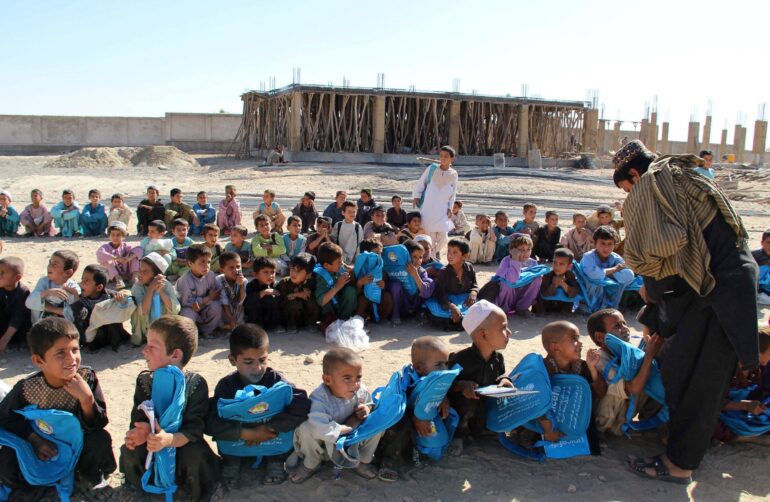

KABUL, AFGHANISTAN – The new academic year has begun in Afghanistan’s warm regions amid a severe shortage of teachers, with nearly all government schools in Kandahar reportedly facing a lack of teaching staff.
A source at Ahmad Shah Baba High School in Kandahar told local media that the school is experiencing teacher shortages across grades one through 12.
The source added that the shortage affects schools throughout Kandahar city as well as districts across the province.
Meanwhile, a local source at the Kandahar Directorate of Education said the hiring of temporary contract teachers has also been suspended this year due to financial constraints.
The source said the Taliban’s Directorate of Education had instructed schools not to hire any contract teachers until further notice.
Officials at the Kandahar Directorate of Education say they have the capacity to enroll 50,000 new students during the new academic year and will admit these students into schools.
The teacher shortage, however, is not limited to Kandahar and remains a problem in schools across Afghanistan.
The shortage comes as the Taliban continues to restrict girls’ access to education while expanding religious schools, or madrasas, across the country.
The number of religious schools in Afghanistan has increased sharply since the Taliban returned to power. By September 2025, their number had risen from around 5,000 to more than 23,000, according to a recent report by Richard Bennett, the UN Special Rapporteur on the situation of human rights in Afghanistan.
Bennett has warned that the Taliban’s expansion of religious schools could transform Afghanistan’s social fabric. In his latest report, he said he had heard concerns from families about changes in their children’s behavior and the broader impact of the growing madrasa system.
The broader education crisis in Afghanistan has been particularly devastating for girls. The Taliban have continued to ban girls from attending secondary schools and women from universities, making Afghanistan the only country in the world where girls and women are formally prohibited from education beyond the primary level.
UNESCO estimates that 2.4 million Afghan girls are currently excluded from secondary education. The restrictions have also reversed years of progress in education and are contributing to wider social and economic consequences, including increased risks of poverty, early marriage and the loss of a generation of educated women.
UNESCO has warned that the continued exclusion of girls and women from education could leave nearly four million girls without access to secondary education by 2030 if the ban remains in place.

