


KABUL, AFGHANISTAN – The human rights organization Rawadari says civil resistance against repression and abuses by the Taliban over the past five years has kept hope for a future based on human rights, equality and human dignity alive.
In a statement issued on Saturday, August 15, marking the fifth anniversary of the fall of Afghanistan’s former republic and the Taliban’s return to power, Rawadari called for continued and strengthened documentation of human rights violations across the country.
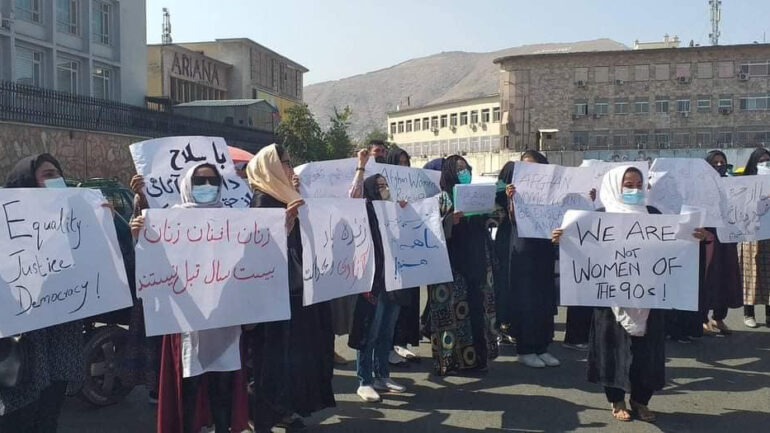
The organization said that despite five years of widespread repression and restrictions, the continued resistance and civil activism of Afghans—particularly women and girls—who are fighting for their fundamental rights and freedoms have preserved hope for a future founded on human rights, equality and human dignity.
Rawadari said civil society organizations, human rights defenders, media outlets and journalists have played an important role in monitoring and documenting violations, collecting and preserving evidence, and amplifying the voices of victims.
According to the organization, at least 6,929 civilians were killed or injured in various incidents between August 15, 2021, and December 31, 2025. The incidents included targeted, mysterious and extrajudicial killings, bombings and suicide attacks, unexploded remnants of war, and military attacks by Pakistan.
Rawadari also reported that at least 399 former government employees and their family members were deliberately killed by the Taliban or unidentified armed individuals during the same period, in targeted, mysterious and extrajudicial killings.
The organization said at least 47 protesters, including eight women, were killed for organizing or participating in peaceful demonstrations.
During the first four years of Taliban rule, at least 6,043 Afghan citizens, including 78 women protesters, were arbitrarily and unlawfully detained, Rawadari said. Most of the detentions were carried out by Taliban intelligence and the Ministry for the Promotion of Virtue and Prevention of Vice.
Among those detained were at least 646 former government employees, 643 civil society activists, journalists and human rights defenders, and 1,366 people accused of cooperating with, belonging to, or having links to groups opposed to the Taliban.
Rawadari further reported that at least 51 detainees died as a result of severe torture in Taliban detention facilities, while at least 171 others were forcibly disappeared. The victims included former government employees, civil society activists, human rights defenders and other civilians.
The organization said Taliban courts also subjected at least 2,423 people to what it described as “extrajudicial, cruel and inhumane” punishments during the period. These included public executions and retaliatory killings, flogging and blackening the faces of defendants.
Despite what Rawadari described as the Taliban’s “repression and crimes,” the organization said women, civil society activists and human rights defenders inside Afghanistan and in exile have continued their campaigns, resistance and advocacy efforts.
Rawadari, expressed hope that civil resistance against the Taliban’s increasing restrictions and pressure would remain active and vibrant.
It said continued civic efforts could contribute to activating international justice and accountability mechanisms for Afghanistan, strengthening solidarity in different parts of the world, and increasing global awareness of the human rights situation in the country.
On August 15, 2021, the Afghan government collapsed and the Taliban returned to power, ushering in a period marked by widespread restrictions on human rights, particularly women’s rights and freedoms. Human rights organizations have described the Taliban’s systematic discrimination against women and girls as gender apartheid.
Rawadari is an Afghan human rights organization established outside Afghanistan to strengthen the culture of human rights in Afghanistan and promote justice, equality and accountability.
The organization monitors and documents human rights violations across the country, with particular attention to the rights of women and girls, ethnic and religious minorities, and other marginalized groups. It gathers information through a network of local monitors and interviews with victims, survivors, eyewitnesses and other sources, and publishes regular reports in Dari, Pashto and English.
Its reports have documented arbitrary detentions, torture, enforced disappearances, extrajudicial killings, restrictions on women’s rights, attacks on minorities and violations of freedom of expression since the Taliban returned to power.

