

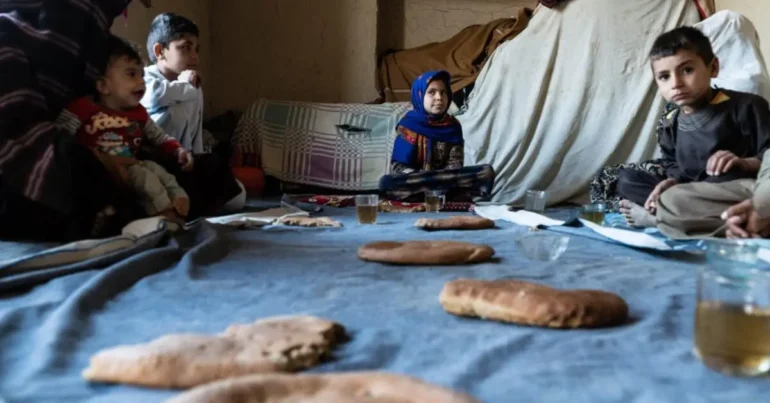

KABUL, AFGHANISTAN – The United Nations Office for the Coordination of Humanitarian Affairs (OCHA) says only 26 percent of the funding required for Afghanistan’s 2026 Humanitarian Needs and Response Plan (HNRP) has been secured, leaving humanitarian organizations struggling to sustain life-saving assistance across the country.
In a post published on X on Wednesday, OCHA said humanitarian partners continue to deliver aid despite severe funding shortages, making every effort to reach vulnerable communities and maintain essential services with increasingly limited resources.
OCHA appealed for $1.7 billion this year to respond to humanitarian needs in Afghanistan. However, more than eight months into the year, the agency says the response plan faces a funding gap of approximately $1.3 billion.
The humanitarian organization YAR, which provides health services in Afghanistan, said the funding shortfall has significantly undermined its ability to sustain reproductive health services.
The organization said the funding shortfall has significantly weakened its ability to maintain reproductive health services. It noted that dwindling resources have disrupted access to essential medicines, medical equipment, and community outreach initiatives, making it increasingly challenging to deliver care to women and girls in remote and underserved communities. Despite these constraints, the organization said it remains committed to continuing its operations and providing critical health services.
The Asian Organization for Sustainable Development (AOSD), another humanitarian organization operating in Afghanistan, said many critical programmes supporting livelihoods, women’s empowerment, food security, climate resilience, education, and community recovery have been suspended because of the severe shortage of humanitarian funding.
The organization said it remains committed to supporting the communities it serves and will continue providing assistance whenever sufficient resources are available.
The Institute of Environment and Natural Resources Management Organization (ENRMO) also warned that the funding crisis extends far beyond financial constraints.
The organization said the funding shortfall is more than a financial constraint, warning that it directly affects the well-being of the communities relying on its assistance. Despite the limited resources, it said it remains dedicated to continuing its work, emphasizing that vulnerable communities still depend on sustained support, hope, and collaboration.
According to OCHA, 21.9 million people in Afghanistan are expected to require humanitarian assistance this year, although humanitarian agencies have prioritized assistance for 17.5 million people due to resource constraints.
Aid organizations say the lack of funding has already forced them to scale back assistance to many vulnerable Afghans. The World Food Programme (WFP) has previously warned that, this year, it has sufficient funding to provide treatment for only one in seven women and children suffering from acute malnutrition.
Afghanistan continues to face one of the world’s most severe humanitarian crises, driven by a combination of recurring natural disasters, economic hardship, conflict-related vulnerabilities, and political restrictions. Flash floods, droughts, and other climate-related disasters have devastated communities across several provinces, destroying homes, farmland, and critical infrastructure.
At the same time, the large-scale return of Afghan migrants from neighboring countries, particularly Iran and Pakistan, has placed additional pressure on already overstretched humanitarian services and limited economic opportunities.
Humanitarian organizations have also warned that restrictions imposed by the Taliban, especially those limiting the employment and movement of women aid workers, have significantly hindered the delivery of assistance, particularly to women and girls. Together with chronic poverty, food insecurity, and declining international funding, these factors have left millions of Afghans in urgent need of humanitarian support.

