

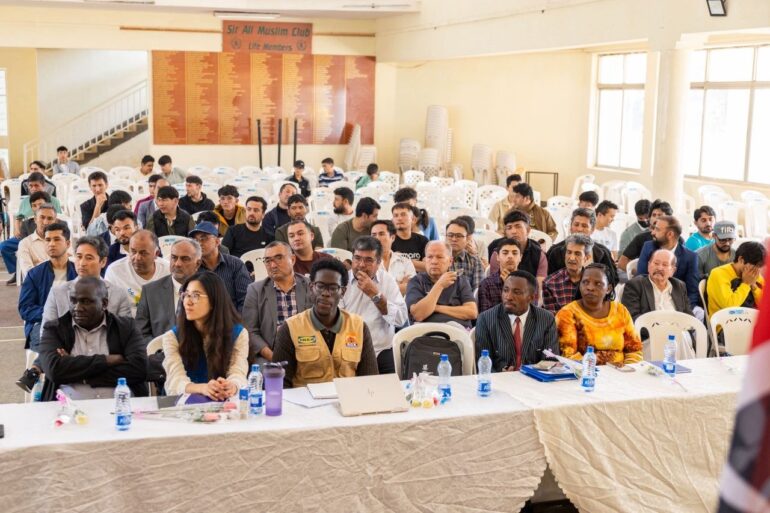

KABUL, AFGHANISTAN – Hazara asylum seekers from Afghanistan in Kenya have called for their concerns to be addressed and for their asylum cases to be processed in a transparent and fair manner.
The meeting was held on Monday, August 24, in Nairobi, the capital of Kenya, and was hosted by the Hazara community. Representatives from Kenya’s Refugee Services Department, the United Nations High Commissioner for Refugees (UNHCR), and several organizations supporting refugees attended the meeting.
Organizers said the meeting focused on the situation of Hazara Afghan asylum seekers in Kenya and the challenges they face in areas including registration, access to documentation, protection services, essential services, family reunification, and the processing of asylum applications.
Hazara asylum seekers said they had left their homes and lives in Afghanistan because of difficult circumstances and security concerns and came to Kenya seeking safety. However, they said they now face numerous challenges regarding their asylum status, residency documentation, access to services, and the future of their families.
They emphasized that they are not seeking special treatment, but expect their cases to be assessed through a transparent and fair process in accordance with humanitarian and legal principles.
Representatives of the Hazara community called on Kenya’s Refugee Services Department to make administrative procedures for refugees clearer and more accessible and to establish direct channels of communication between officials and asylum seekers.
They also urged UNHCR in Kenya to increase its engagement and communication with Afghan Hazara asylum seekers in the country.
The asylum seekers further called for greater protection for vulnerable individuals, assistance with registration and documentation, and improved access to essential services and social support.
This is not the first time concerns have been raised about the situation of Afghan refugees in Kenya. Earlier, Kabul Now published a report on February 2, 2026, documented the difficult conditions faced by Afghan, particularly Hazara, refugees in Kenya’s Kakuma Refugee Camp.
Refugees interviewed by the outlet described prolonged uncertainty over resettlement cases, inadequate financial and food assistance, poor living conditions and serious security concerns, including armed robberies and attacks. Hakim Mohammadi, a former Afghan civil society activist who has lived in Kakuma since 2024 while awaiting a resettlement decision, said refugees face severe hardship and lack clear information about the future of their cases.
Other Afghan refugees also reported nighttime attacks and theft inside the camp, highlighting concerns over the protection and safety of refugees.
Following the Taliban’s return to power in Afghanistan in 2021, around 500 Afghan families travelled to Kenya. The asylum seekers initially hoped that, through UNHCR’s office in Kenya, they would eventually be able to resettle in other countries. However, nearly five years later, many remain in the East African country and say they continue to face uncertainty over their asylum cases and future.
The Hazara, a predominantly Shia Muslim ethnic minority in Afghanistan, have faced decades of discrimination, persecution and targeted violence. Since the Taliban returned to power in 2021, concerns over the community’s safety have intensified, with Hazara civilians facing restrictions, forced displacement, land disputes, arbitrary arrests and attacks by armed groups, particularly Islamic State Khorasan (ISKP).
Hazara communities have also reported growing pressure on their religious and cultural practices, while women and girls face the broader restrictions imposed by the Taliban. Despite the Taliban’s claims that security has improved, human rights organizations and international observers continue to document serious risks facing Hazaras, contributing to a climate of fear and uncertainty for many members of the community.
A report published by the Bolaq Analysts Network on August 17 documented continued insecurity and discrimination against the Hazara community during the five years of Taliban rule. According to the report, at least 36 terrorist attacks and 47 targeted killings were recorded in Hazara-populated areas, resulting in at least 497 deaths, including 81 women and 44 children, while 363 others were injured.
The report also highlighted economic hardship, cultural restrictions, legal discrimination and land dispossession affecting Hazaras.

