

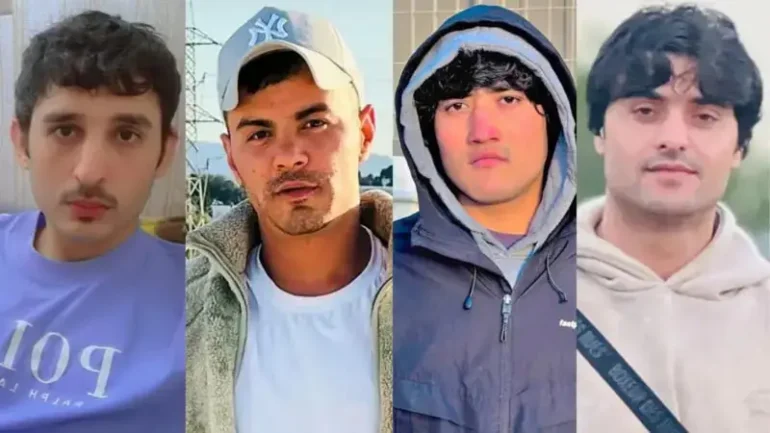

KABUL, AFGHANISTAN – The Taliban’s Ministry of Refugees and Repatriation says the bodies of three Afghan citizens who were burned inside a vehicle in a criminal incident in Italy nearly two months ago have been repatriated to Afghanistan.
In a statement issued on Saturday (August 1), the ministry said the victims’ bodies were transferred to Kabul on the fifth and sixth days of the current Afghan solar month and were later transported by ambulance to Sholgara district in Balkh province, District 12 of Kabul, and Koh Safi district in Parwan province for burial.
The three Afghan nationals, along with one Pakistani citizen, were killed on May 31 in Italy’s southern Calabria region after being trapped inside a vehicle that was set on fire. Italian police arrested two Pakistani nationals on charges of murdering the four victims and setting the vehicle ablaze.
The deceased were identified as Afghan nationals Amin Afzal Khogyani, 28, Safi Ejad, 27, and Esmatullah Qaemi, 19 who were originally from the provinces of Balkh, Nangarhar, and Parwan, along with Pakistani national Waseem Khan, 29. All four were employed as agricultural workers in the area.
Following the incident, the Taliban’s Ministry of Foreign Affairs condemned the killings and called for a transparent and impartial investigation into the case.
Italian Prime Minister Giorgia Meloni also expressed condolences to the victims’ families and pledged that justice would be served.
In a statement posted on X, Prime Minister Meloni said she was “deeply shocked” by the incident. “Italy will not retreat in the face of violence and barbarity,” she declared, adding that her government’s priority is to “shed full light on this terrible crime” and ensure full accountability.
The killings drew attention to the dangers faced by migrants and asylum seekers traveling or working abroad, as well as the need for thorough investigations into crimes targeting foreign nationals.
Human rights groups and labour unions have highlighted that thousands of migrant workers, including refugees and asylum seekers from Asia and Africa, often face poor working conditions, low wages, and limited legal protections, making them vulnerable to abuse by illegal recruitment networks.
The repatriation of the victims’ remains marks the latest development in the case, while Italian authorities continue legal proceedings against the suspects accused of carrying out the attack.

