

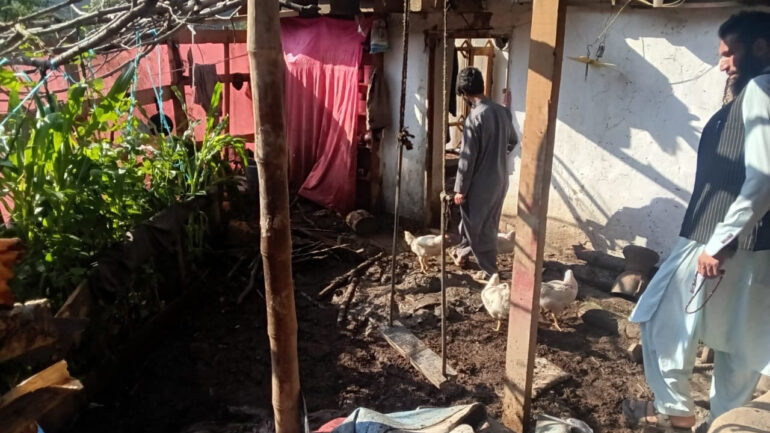

KABUL, AFGHANISTAN – The World Health Organization (WHO) published its Situation Report No. 2 on 27 July 2026, detailing the humanitarian impact of flash floods that struck eastern, southeastern, and central Afghanistan between 20 and 25 July 2026.
According to the report, the floods killed at least 23 people, injured 125 others, and left five people missing, while causing widespread destruction to homes, public infrastructure, agricultural land, and essential services.
The floods affected multiple provinces, including Nuristan, Nangarhar, Laghman, Paktika, Paktia, Khost, Ghazni, Kabul, Kapisa, Panjshir, Parwan, Logar, and Maidan Wardak. The most severe damage was reported in Parun City, the capital of Nuristan Province, where local authorities recorded all 23 fatalities, 125 injuries, and five missing persons following flash floods on 20 July.
In the southeastern region, flooding damaged homes, farmland, roads, and water supply networks across Paktika, Paktia, Khost, and Ghazni provinces. At least 26 houses were destroyed in Paktika, while flooding killed two people in Barmal District and two children in Zurmat District of Paktia. Although no deaths were reported in Ghazni, extensive losses to crops, orchards, farmland, and residential properties were recorded.
Central Afghanistan also experienced severe flooding on 23 July, affecting hundreds of families in Kabul, Kapisa, Panjshir, Parwan, Logar, and Maidan Wardak. Residential homes and community infrastructure suffered extensive damage, displacing many families and disrupting access to essential services, including health care. Road damage also affected access to the Khak-e-Jabar Comprehensive Health Centre in Kabul Province.
WHO said it activated its emergency coordination mechanism immediately after the flooding and deployed rapid assessment teams to the affected areas. The organization delivered five emergency health kits, including trauma and emergency surgery supplies, and prepositioned additional emergency stocks in Jalalabad, Gardiz, and Kabul to support the response.
WHO also coordinated with Health Cluster partners to deploy three Mobile Health Teams providing essential medical, maternal, and child health services, while outreach teams were mobilized to provide psychological first aid and mental health support.
The report warned that damaged drinking water systems have increased the risk of waterborne disease outbreaks, while shortages of medicines, destruction of health facilities, power outages, and difficult access caused by damaged roads and mountainous terrain continue to hamper relief efforts.
WHO identified emergency health services, safe drinking water, sanitation, temporary shelter, mental health support, disease surveillance, and restoration of critical infrastructure as the most urgent priorities for the affected communities.

