

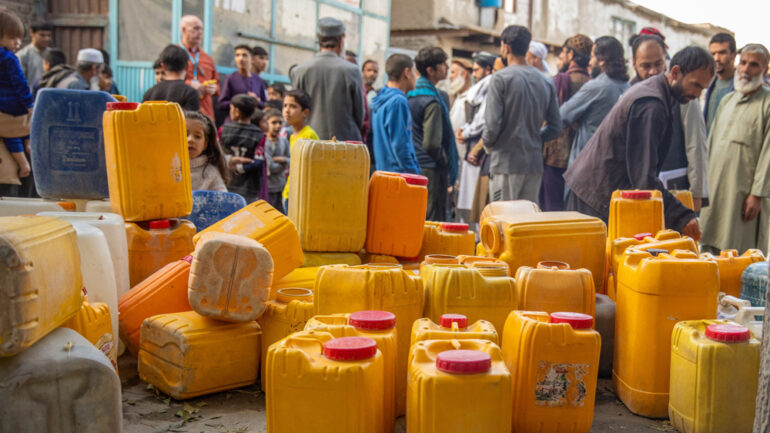

KABUL, AFGHANISTAN – The United Nations Human Settlements Programme (UN-Habitat) has warned that millions of people in Afghanistan continue to lack reliable access to safe drinking water, underscoring the country’s worsening water crisis and the urgent need for sustainable urban development.
In a statement published on Tuesday, UN-Habitat said, “Water is life — yet millions in Afghanistan still lack reliable access to safe drinking water.”
The agency called for greater investment in urban planning and waste management to expand access to clean water, improve sanitation, and safeguard water resources for future generations in line with Sustainable Development Goal 6 (SDG 6), which aims to ensure the availability and sustainable management of water and sanitation for all.
The warning comes as Afghanistan faces a deepening humanitarian crisis driven by climate change, prolonged drought, rapid urbanization, and decades of underinvestment in basic infrastructure.
Many communities across the country continue to struggle with water shortages, while aging or inadequate water systems have left millions without reliable access to safe drinking water.
According to United Nations agencies, Afghanistan is experiencing one of its most severe water crises in decades. Consecutive years of drought, declining groundwater levels, and rising temperatures have reduced water availability across much of the country, particularly in rural areas where communities rely heavily on agriculture and livestock for their livelihoods.
Water scarcity has also contributed to food insecurity, displacement, and growing humanitarian needs.
In urban areas, rapid population growth and unplanned expansion have placed additional pressure on already fragile water and sanitation systems. Many households depend on expensive private water vendors or unsafe water sources, increasing the risk of waterborne diseases, particularly among children and other vulnerable populations.
Based on a nationwide assessment conducted last year, 85% of households experienced at least one environmental hazard, compared to 67% in 2024. The proportion of households prioritizing water for drinking and hygiene increased from 26% to 37%, reflecting worsening accessibility and affordability.
Humanitarian organizations have repeatedly warned that improving access to clean water and sanitation is essential not only for protecting public health but also for strengthening communities’ resilience to climate-related shocks.
They have called for sustained international investment in water infrastructure, climate adaptation measures, and sustainable resource management to help prevent further deterioration of living conditions across Afghanistan.

