

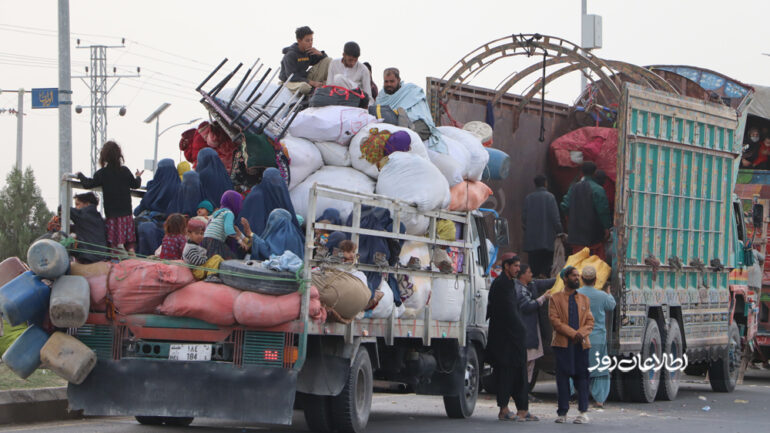

KABUL, AFGHANISTAN – More than 4,000 Afghan nationals returned from Pakistan to Afghanistan on Sunday, Taliban authorities said, as Islamabad stepped up its campaign to deport undocumented Afghans.
The Taliban’s Secretariat of the High Commission for Addressing Returnees’ Issues announced on Monday that a total of 780 families, comprising 4,100 people, crossed into Afghanistan from Pakistan and Iran over the previous day.
According to the commission, 677 families, totaling 3,568 individuals, entered Afghanistan through the Torkham border crossing in eastern Nangarhar province, the country’s busiest crossing with Pakistan.
Another 85 families, comprising 469 people, crossed into Afghanistan through the Spin Boldak border crossing in southern Kandahar province, while 18 families, totaling 63 individuals, returned from Iran via the Islam Qala crossing in western Herat province, the commission added.
The commission said authorities registered the returnees upon arrival, distributed cash assistance and SIM cards, and arranged transportation to their home provinces.
The latest returns come as Pakistan accelerates enforcement of its Illegal Foreigners Repatriation Plan, originally launched in late 2023. In a directive last week, Pakistan’s Interior Ministry instructed law enforcement agencies to intensify arresting undocumented Afghan migrants from July 10 and ordered the immediate detention of those residing without valid visas.
Provincial administrations were also directed to submit daily reports on identifications, actions taken and current status of undocumented Afghans.
Enforcement operations have ramped up in major cities with significant Afghan populations, including Islamabad, Peshawar, Quetta and Karachi. Local media have reported the detention of approximately 20,000 Afghan nationals in Peshawar alone, who are expected to be deported following the completion of an ongoing polio vaccination campaign in the area.
Pakistan has long hosted one of the world’s largest Afghan refugee populations, with successive waves of displacement fueled by decades of conflict, political upheaval and economic hardship in Afghanistan. Officials in Islamabad say around 2.4 million Afghans have either returned voluntarily or been deported since the repatriation plan took effect. Data from the United Nations refugee agency, UNHCR, indicates that more than 1.15 million Afghans returned from Pakistan during 2025 alone.
The large-scale returns have prompted warnings from UN agencies and humanitarian organizations about the challenges awaiting returnees in Afghanistan, which continues to grapple with severe economic difficulties, widespread unemployment and limited access to public services.
Aid groups have stressed the need for returns to be voluntary, safe and in accordance with international protections, particularly for refugees and vulnerable individuals, while calling on the international community to increase humanitarian aid and resettlement options.

