

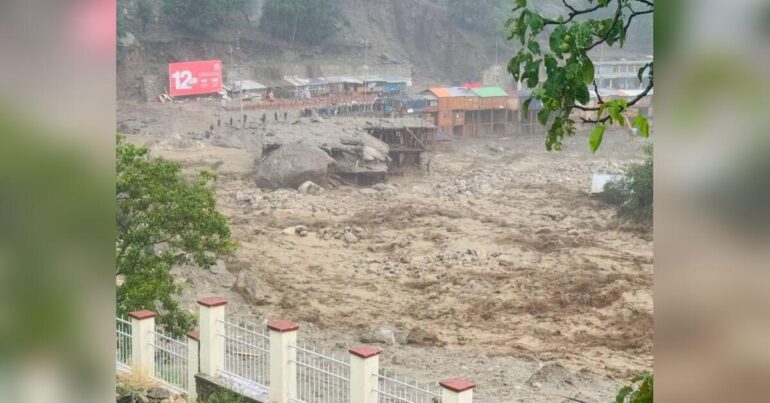

KABUL, AFGHANISTAN – At least six people have been killed and 60 others remain missing after heavy rainfall triggered devastating floods in Afghanistan’s eastern Nuristan province, Taliban authorities said on Monday.
The floods struck Parun, the provincial capital, at around 3:00 p.m. local time on Monday, sweeping through parts of the city and damaging homes, public buildings, and infrastructure, according to Faridun Samim, the Taliban-appointed governor’s spokesperson in Nuristan.
Samim said the flooding caused damage to the municipality’s building, several hotels, telecommunications offices, parks, bridges, and residential properties. He estimated that the disaster had caused financial losses of around $35 million to residents.
He added that six deaths had so far been confirmed, but warned that the casualty figure could increase as rescue teams continue searching for dozens of people reported missing.
The floods followed heavy rainfall that affected several parts of Afghanistan over the past day, with eastern and southern provinces among the areas hit hardest. The flooding has also damaged farmland, killed livestock, and disrupted the livelihoods of affected communities.
Afghanistan is among the countries most vulnerable to natural disasters, including floods, droughts, and earthquakes. Limited infrastructure, environmental degradation, and difficult access to remote mountainous areas often complicate disaster response efforts.
Earlier this year, weeks of heavy rainfall and flooding across Afghanistan killed at least 157 people and injured more than 220 others in April. The disaster destroyed thousands of homes, damaged agricultural land, and displaced many families.
The latest floods come as Afghanistan continues to face a severe humanitarian crisis. The United Nations estimates that nearly 22 million people across the country need humanitarian assistance, while more than 17 million people, including a large number of women and children, are experiencing acute food insecurity.
Humanitarian organizations have repeatedly called for sustained international funding to support emergency response operations and assist communities affected by natural disasters and economic hardship.

