
KABUL, AFGHANISTAN – Pakistan and China have agreed to enhance counterterrorism coordination against militant groups including the Tehrik-e-Taliban Pakistan (TTP) and the East Turkestan Islamic Movement (ETIM), which both countries say operate from Afghan territory.
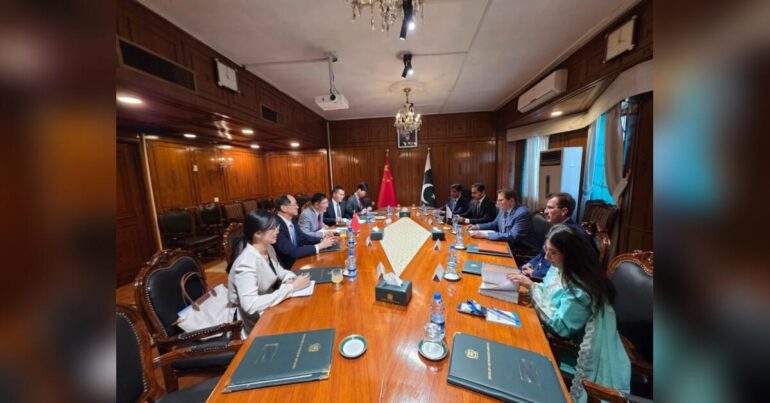
Pakistan’s Special Representative for Afghanistan, Mohammad Sadiq, held talks with China’s Special Envoy for Afghanistan, Yu Xiaoyong, in Islamabad on Monday, focusing on shared security threats emanating from across the border.
“We held productive talks on regional security, including threats from TTP and ETIM operating from Afghan soil,” Sadiq said in a post on X after the meeting.
He said the two sides agreed to enhance joint efforts against militant threats.
“We Agreed to strengthen coordination & synchronize counter-terrorism efforts to protect regional peace & stability,” Sadiq wrote.
The discussions come amid a marked increase in militant attacks inside Pakistan, many claimed by or attributed to the TTP. Pakistani authorities have repeatedly accused the group of planning and launching cross-border strikes from safe havens in Afghanistan, allegations consistently denied by the Taliban authorities.
China, for its part, has long voiced concerns over ETIM, a separatist group Beijing blames for instigating unrest in its Xinjiang region. Chinese officials allege that ETIM fighters have used northeastern Afghan border areas as transit routes and potential launch pads for activities targeting China.
Counterterrorism cooperation related to Afghanistan was also highlighted during Pakistani Prime Minister Shehbaz Sharif’s visit to Beijing last week, where he met Chinese President Xi Jinping.
In a joint statement issued after the visit, Pakistan’s Foreign Ministry said both countries stressed that no individual, group, or organization, including the TTP and ETIM, should be allowed to use Afghan territory to threaten regional security, harm the interests of neighboring states, or carry out terrorist activities.
Pakistan and China maintain close political, economic, and security ties and have increasingly coordinated their positions on Afghanistan since the Taliban returned to power in 2021. Both countries have repeatedly called for stronger measures against militant groups that they say pose threats beyond Afghanistan’s borders.
The Taliban reject allegations that foreign militant groups operate from Afghanistan or receive support from its authorities. Taliban officials have repeatedly said Afghan territory will not be used to threaten other countries and have urged Pakistan to address its security challenges within its own borders.