

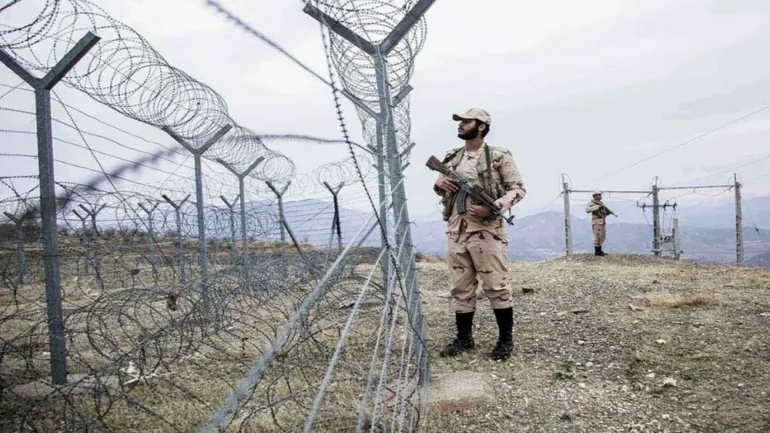

KABUL, AFGHANISTAN – The police of Sistan and Baluchestan in Iran have announced that six “terrorists” who were attempting to enter the country were killed in border areas near Afghanistan.
According to IRNA, Ali-Akbar Javidan, the commander of the Border Guard of FARAJA in Sistan and Baluchestan, said that these individuals were killed last night (Friday, June 5) in a clash with the forces of the “Zabol Border Regiment.”
The Zabol district of Iran’s Sistan and Baluchestan province shares a border with Afghanistan’s Nimroz province and, after Zahedan, is one of the most populated districts of Sistan and Baluchestan.
The FARAJA commander in Sistan and Baluchestan said that these individuals intended to enter Iran and attack its border guard posts and were killed in a reciprocal clash.
He added that Iranian border forces, while clearing the area, discovered two “handguns” and a large amount of ammunition belonging to these individuals.
The police of Sistan and Baluchestan have not identified these individuals and have not provided any details regarding their political or military affiliation.
Iran and the Taliban have maintained a complex and often tense relationship since the Taliban’s return to power in Afghanistan in 2021. Earlier Iranian officials reported that talks about possible recognition of the Taliban government by Tehran have been underway, and some observers suggest that Iran may formally acknowledge the group in the near future.
While both sides have engaged in diplomatic contacts and border coordination at times, their shared frontier—particularly between Iran’s Sistan and Baluchestan province and Afghanistan’s Nimroz province—has repeatedly witnessed armed clashes, accusations of cross-border firing, and disputes over security and territorial control.
The Sistan–Baluchestan–Nimroz border region remains one of the most sensitive and volatile security zones in the wider Iran–Afghanistan relationship. Iran has increased border fortifications and security operations in response to concerns about infiltration by armed groups and trafficking networks, while the Taliban have sought to assert control over border crossings and prevent violations of Afghan territory.
Despite occasional cooperation, mistrust persists, and each new clash raises concerns about escalation in a region already affected by poverty, underdevelopment, and the presence of multiple non-state armed actors.
In addition,Iran’s deportation policy toward Afghan refugees has significantly intensified in recent years, with authorities carrying out large-scale returns of undocumented Afghans across border provinces such as Sistan and Baluchestan and Khorasan. According to UN agencies, hundreds of thousands of Afghans have been deported in different phases of enforcement campaigns, particularly since 2025, often under the justification of national security, economic pressure, and undocumented residency concerns.
Many returnees have reported difficult conditions during detention and transfer processes, while humanitarian organizations have warned that mass returns are placing additional pressure on Afghanistan’s already fragile economy and social services.
Human rights groups and international observers have repeatedly expressed concern over Iran’s deportation practices, arguing that they often lack due process and place vulnerable groups—including women, children, and long-term residents—at risk upon return to Afghanistan.
Iranian officials, however, maintain that the measures are necessary to regulate migration, reduce illegal employment, and address security challenges along the border. The continued deportations, combined with periodic border clashes between Iranian forces and armed groups near Afghanistan, have contributed to broader regional tensions, highlighting the fragile and complex nature of Iran–Afghanistan relations.

