

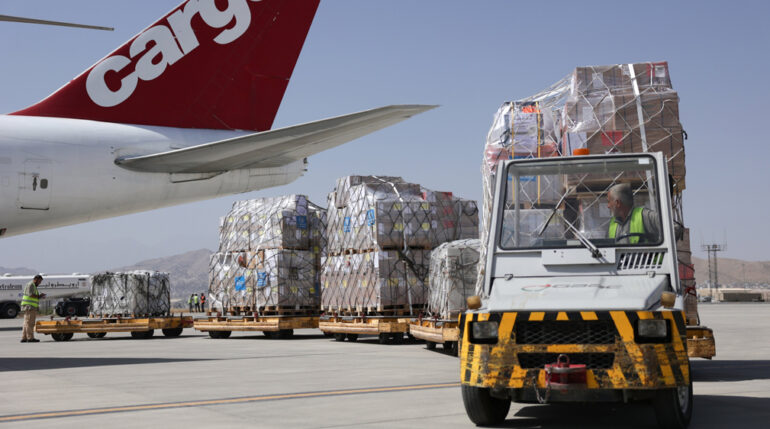

KABUL, AFGHANISTAN – The World Food Programme says the closure of the Strait of Hormuz has tripled the cost of delivering food aid to Afghanistan and added about three weeks to delivery times, warning that the disruption is raising the risk of hunger among children.
WFP Afghanistan director John Aylieff said the agency has rerouted fortified biscuits and other essential supplies overland through seven countries to bypass the blocked maritime route. “Afghan children today are going hungry as a result,” he told The Guardian, adding that many could die if disruptions continue.
Afghanistan, a landlocked country, depends heavily on imports and humanitarian assistance, making it particularly exposed to supply chain disruptions. The WFP said the longer routes are increasing operational costs and slowing deliveries at a time when needs remain high.
The disruption follows a conflict that began in February involving the United States, Israel, and Iran, which has led to repeated closures and restrictions in the narrow Strait of Hormuz, a key global shipping corridor for energy and goods.
Aid agencies said the impact extends beyond Afghanistan, with deliveries to Yemen, Somalia, Myanmar, Bangladesh, and Sudan also delayed and becoming more expensive, affecting millions of people reliant on food and medical assistance.
According to The Guardian, global oil prices have fluctuated sharply since the conflict began, rising from around $60 a barrel earlier in the year to nearly $120 at their peak. The reduced number of cargo ships passing through the strait has constrained supplies of oil, food, fertiliser, and medicine worldwide, sharply increasing costs for what remains available.
Save the Children reported that every $5 increase in oil prices adds around $340,000 a month to its shipping, fuel, food, and medical expenses. Willem Zuidema, the group’s director of global supply, said if prices remain near $100 through 2026, additional costs could reach $27 million, equivalent to one month of aid for nearly 40,000 children.
“We are being squeezed from both ends,” Zuidema said. “While world leaders are cutting aid budgets, conflict is driving up the cost of every shipment, every sachet of food, every medical kit we send.”
The WFP estimates the disruption could push an additional 45 million people into hunger globally, on top of 318 million already facing food insecurity before the February escalation. A spokesperson said rising costs may also limit the agency’s ability to reach around 1.5 million people in the coming months.
Humanitarian organizations have called for the establishment of a dedicated “humanitarian corridor” through the Strait of Hormuz to allow aid shipments stranded in regional hubs to move more quickly and at lower cost to countries in need.
Afghanistan remains among the most aid-dependent countries in the world following the Taliban’s return to power in 2021. The United Nations says about 21.9 million people—nearly half the population—require humanitarian assistance, as economic strain, reduced donor funding, recurring natural disasters, and large-scale returns of refugees continue to drive widespread food insecurity and malnutrition.

