

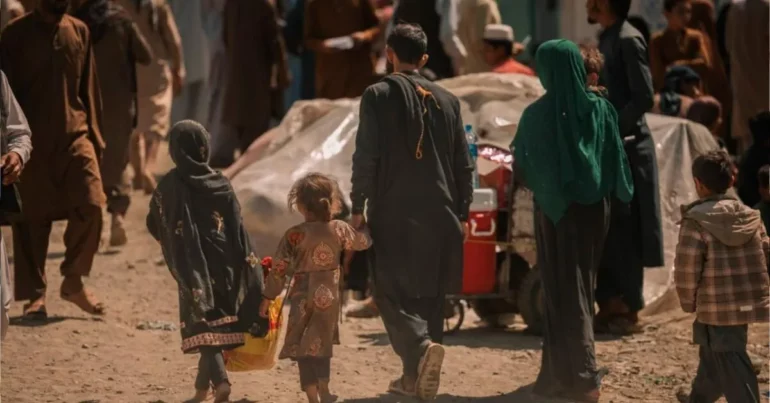

KABUL, AFGHANISTAN – More than 9,000 Afghan refugees were deported or voluntarily returned from Pakistan over the past two days, the Taliban says, as Islamabad intensifies its nationwide crackdown on Afghans amid strained relations with Taliban authorities.
In separate statements, the Taliban-run commission for refugee affairs said the returnees crossed into Afghanistan on Tuesday and Wednesday through the Torkham border in the east, as well as the Spin Boldak and Bahramcha crossings in Kandahar and Helmand provinces.
The commission also reported that 799 Afghans were returned from Iran on the same days via the Islam Qala crossing in Herat province and the Pul-e-Abrisham crossing in Nimroz province.
Deportations from Pakistan have surged in recent weeks, with security forces conducting widespread raids, detentions, and expulsions targeting undocumented Afghans. The move comes amid ongoing tensions with the Taliban over alleged cross-border militancy.
According to the UN Refugee Agency (UNHCR), nearly 270,000 Afghans returned from Pakistan and Iran between January and March this year, adding further pressure on Afghanistan’s already overstretched humanitarian and economic resources.
The surge in returns coincides with the ongoing conflict between Pakistan and the Taliban. Islamabad closed major border crossings in late February after hostilities escalated, severely disrupting trade and travel. The crossings were reopened in recent days primarily to facilitate the movement of deportees, while other forms of cross-border movement remain heavily restricted.
Meanwhile, Afghanistan is grappling with a worsening humanitarian crisis. The United Nations estimates that nearly 22 million people — almost half the population — require humanitarian assistance this year, while around 4 million children are suffering from acute malnutrition.
Many returnees are families who lived in Pakistan and Iran for years or decades. They now face limited infrastructure, weak economic opportunities, and widespread poverty in Afghanistan.
Humanitarian agencies have warned that continued large-scale returns without sustained international support could deepen poverty and trigger further displacement. Women and girls are considered particularly vulnerable due to restrictions on education, employment and public life under Taliban rule.
Human rights groups and international aid agencies have repeatedly urged Pakistan and Iran to halt forced returns, citing a worsening humanitarian crisis and security risks, including possible retaliation faced by returnees — particularly women, journalists, activists and former government officials — under Taliban rule.

