

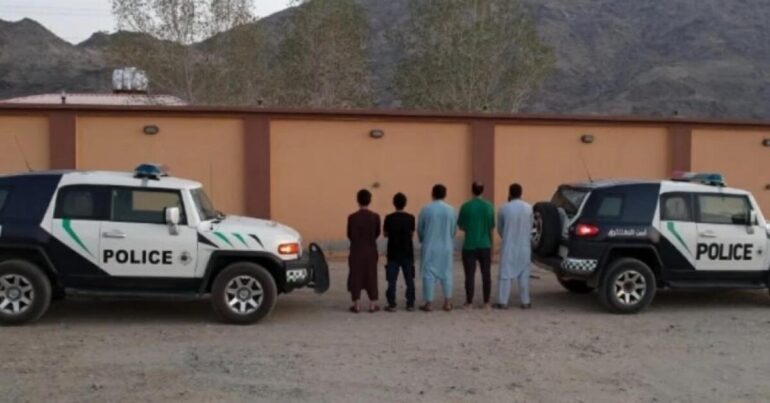

KABUL, AFGHANISTAN – Saudi Arabia’s Hajj Security Forces arrested five Afghan nationals for attempting to enter the city of Makkah on foot via a desert route without official Hajj permits, local media reported.
According to the Saudi Gazette, the five men were detained after authorities discovered they were trying to bypass Hajj entry regulations by crossing through a desert area leading to Makkah.
Saudi authorities said that legal proceedings are underway against the individuals as part of a wider crackdown to enforce strict pilgrimage rules during the current Hajj season.
Saudi security officials renewed calls for residents and pilgrims to comply with Hajj instructions and warned against attempts to enter Makkah without authorization. Authorities also urged the public to report violators.
Saudi Arabia imposes strict permit requirements during Hajj to regulate the flow of pilgrims and manage security and overcrowding in the holy sites. In recent years, authorities have increased inspections and penalties against unauthorized pilgrims and transporters.
The arrests were announced as chartered and regular flights continue to ferry Afghan pilgrims from Afghanistan to Medina and Jeddah airports for this year’s Hajj. According to Taliban authorities, approximately 30,000 Afghan pilgrims are expected to participate, about the same number as last year.
The Taliban announced last year that each Afghan pilgrim typically spends about $3,850 on travel, accommodation, visas, and other related expenses, bringing total spending by Afghan pilgrims to an estimated $115 million each year.
For many Afghans, performing Hajj is viewed as a lifelong religious aspiration and a major family commitment, even as the country struggles with one of the world’s worst humanitarian crises. The United Nations estimates that nearly 22 million people — approximately 45% of Afghanistan’s population — require humanitarian assistance due to ongoing economic decline, sharp reductions in foreign aid, widespread unemployment, and international isolation following the Taliban’s return to power in 2021.

