

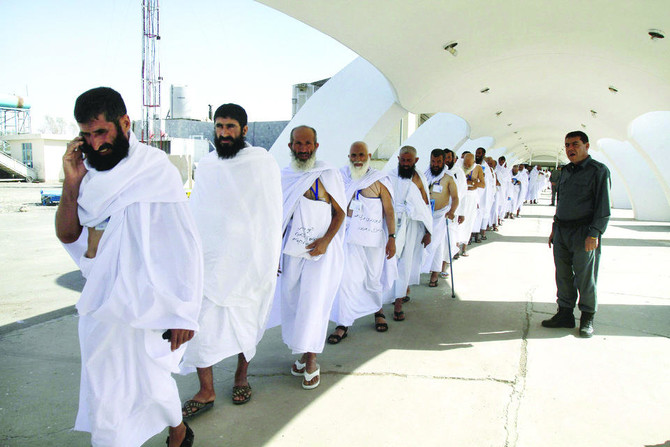

KABUL — Despite a worsening humanitarian crisis and widespread poverty, Afghan pilgrims spent more than AFN 8.16 billion (approximately USD 111 million) on this year’s Hajj pilgrimage, according to the Taliban-run Ministry of Hajj and Religious Affairs.
Speaking at a press conference in Kabul on Tuesday, Taliban’s Minister Noor Mohammad Saqib said 30,000 Afghans travelled to Saudi Arabia for the 2025 Hajj season. The estimated cost per pilgrim was AFN 282,000 (around USD 3,850), a figure significantly out of reach for most ordinary Afghans.
The authorities collected over AFN 8.28 billion (roughly USD 113 million) in total, of which AFN 8.16 billion was spent on travel, accommodation, and logistical arrangements. Saqib said the unused amount would be refunded, with each pilgrim expected to receive approximately AFN 3,935 (about USD 54) back.
He also confirmed that 10 Afghan pilgrims died during the pilgrimage.
While the Taliban have highlighted the successful coordination of this year’s pilgrimage, the sheer volume of spending has raised questions at home and abroad, especially as the country remains gripped by a collapsing economy, mass unemployment, and deepening food insecurity.
Afghanistan is currently facing one of the world’s worst humanitarian crises. According to the United Nations, more than 23 million people—over half the population—require food aid, while aid cuts, donor fatigue, and political isolation have forced the closure of over 400 health facilities.
Foreign aid, which previously accounted for nearly 75% of public spending, has sharply declined since the Taliban returned to power in 2021.
The large-scale expenditure on Hajj by a small segment of the population highlights the growing economic divide. Analysts say it also underscores the role of religious travel as a politically useful but economically distorted priority under Taliban rule.
Critics argue that while ordinary Afghans struggle to access basic necessities, including food, health care, and education, the Taliban’s focus on high-profile religious events reveals a disconnect from the population’s pressing needs. In rural areas, many families are resorting to child labor and early marriage as coping strategies for survival.
Last year, the Hajj cost for Afghan pilgrims was estimated at USD 177 million, with the same number, 30,000, taking part, further fueling concerns over elite spending and lack of oversight in financial matters under Taliban.
Humanitarian agencies continue to call for greater international support and equitable aid distribution, warning that without urgent action, Afghanistan’s economic collapse and growing inequality will further destabilize the country.

