
KABUL, AFGHANISTAN – Opium production in Afghanistan increased nearly fivefold in 2026 compared with the previous year, despite the Taliban ban, according to a United Nations survey released on Thursday. The Taliban rejected the finding as inconsistent with its field data.
In its report, Afghanistan Opium Survey 2026: Cultivation, Production and Market Analysis, the United Nations Office on Drugs and Crime (UNODC) estimated that opium production in Afghanistan rose to just under 1,500 tonnes in 2026, up from about 300 tonnes in 2025, an increase of around 400%. The area under poppy cultivation also increased sharply, from approximately 10,000 hectares to more than 43,000 hectares, the report said.
The increase marks a significant reversal after a sharp decline in cultivation following the Taliban’s prohibition on narcotics in April 2022. Although cultivation and production remain below their pre-ban levels, the latest figures suggest that restrictions have become less effective in preventing farmers from growing poppies.
The survey found that poppy cultivation was detected in 16 of Afghanistan’s 34 provinces in 2026, five more than in the previous year. The UNODC said the expansion indicated that the drug ban appeared to be weakening, despite continued enforcement efforts by the Taliban authorities.
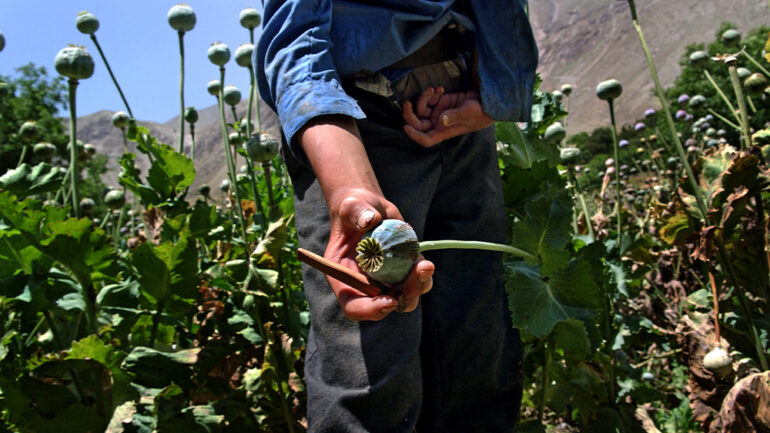
Northeastern Afghanistan accounted for 76% of the country’s total poppy cultivation, with much of the activity concentrated in Badakhshan province. The region has emerged as the country’s main cultivation area, replacing the southwest, where poppy production had traditionally been concentrated before the ban.
The report estimated that cultivation in the northeastern region increased from just under 7,000 hectares in 2025 to nearly 33,000 hectares in 2026. Cultivation in the southwest also rose, from about 1,300 hectares to just over 5,000 hectares.
The UNODC said the Taliban’s eradication campaign had prompted local resistance in some areas, including protests and clashes in Badakhshan in May and June 2026. The agency also found that some farmers had adapted their cultivation practices to avoid detection, including growing poppies among grain crops and inside enclosed compounds, as well as changing planting and harvesting schedules.
According to the report, despite the increase in production, the average price of dried opium fell from about $570 per kilogram in 2025 to $500 in 2026. However, prices remained substantially higher than pre-ban levels of less than $100 per kilogram, potentially maintaining an economic incentive for farmers to grow poppies.
Meanwhile, the Taliban’s Ministry of Interior rejected the UN findings, saying they did not accurately reflect conditions on the ground and overlooked its anti-narcotics campaign.
In comments included in the UN report, the ministry’s counter-narcotics department estimated that poppy cultivation covered about 24,000 hectares in 2026, below the UNODC’s estimate of 43,300 hectares. It also said it had eradicated approximately 23,000 hectares of poppy fields before the crops reached harvest.
The UNODC said it could not technically verify the Taliban’s reported eradication figures. It added that most eradication in previous years had taken place before the satellite survey, meaning the reported operations were not expected to affect its cultivation estimates. The agency said further analysis would follow.
The UN agency also warned that drug trafficking networks remained active despite the ban. Traffickers may have relied on existing opium stockpiles to maintain supplies, but evidence suggests those stocks are declining. The UNODC’s 2026 World Drug Report also identified early signs of falling heroin supplies in Europe.