

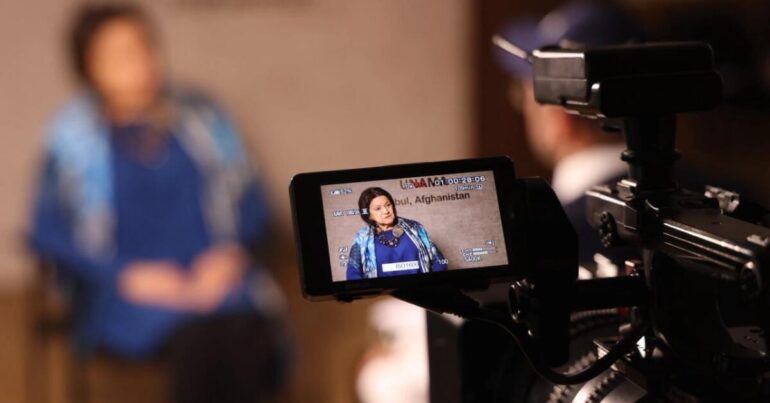

KABUL, AFGHANISTAN – Rosemary DiCarlo, the United Nations Under-Secretary-General for Political and Peacebuilding Affairs, concluded her visit to Afghanistan on Monday after meeting with Taliban authorities, civil society representatives, women leaders and Afghan female UN personnel.
During her meetings with Taliban authorities, DiCarlo reaffirmed the United Nations’ commitment to advancing the Doha process. She noted progress in two working groups focused on counter-narcotics and the private sector and stressed the importance of turning ongoing dialogue into further practical results for the Afghan people.
According to the UN, both sides reaffirmed their commitment to continued engagement and cooperation.
DiCarlo also conveyed the concerns of UN member states regarding the situation of women and girls in Afghanistan, particularly restrictions on girls’ access to education. She stressed that progress on the rights of women and girls would contribute to Afghanistan’s development.
She also raised with the Taliban the restrictions preventing Afghan female UN personnel from entering UN offices across the country.
The UN official highlighted Afghanistan’s broader challenges, including socioeconomic pressures, climate change and natural disasters. She also expressed the UN’s readiness to support Afghans returning to the country from neighboring states.
During meetings with civil society representatives and women leaders, DiCarlo recognized their important role and contributions to communities across Afghanistan.
The visit marked DiCarlo’s fifth trip to Afghanistan since the Taliban returned to power. During her stay, she met with Taliban Foreign Minister Amir Khan Muttaqi in Kabul and Taliban spokesperson Zabihullah Mujahid in Kandahar.
DiCarlo has also been involved in the UN-facilitated Doha process, which seeks to establish a more coherent international approach to engagement with Afghanistan. The process has included working groups on issues including counter-narcotics and the private sector.
The UN’s engagement with the Taliban has, however, continued amid criticism from Afghan women and civil society groups over the lack of meaningful participation of women in some stages of the Doha process. Critics have also accused the international community of normalizing the Taliban through continued diplomatic engagement.
Since returning to power in August 2021, the Taliban have imposed a wide range of restrictions on women and girls, including bans on secondary and higher education, severe limitations on employment and freedom of movement, restrictions on access to public spaces and healthcare, and rules governing women’s clothing and public expression.
European Union assessments describe the cumulative impact of these measures as persecution, while EU officials have said that the systematic and systemic violations of women’s and girls’ rights may amount to gender persecution as a crime against humanity.
The Taliban’s policies have prompted Afghan women’s rights activists and international human rights advocates to describe the system imposed on women in Afghanistan as gender apartheid. The European Union’s own asylum analysis notes that the situation has been described as “gender apartheid” and says that the accumulation of discriminatory measures restricts women’s freedom of movement, access to education, employment, healthcare and justice.
In July 2025, the International Criminal Court also issued arrest warrants for Taliban Supreme Leader Hibatullah Akhundzada and Chief Justice Abdul Hakim Haqqani over alleged crimes against humanity of persecution on gender grounds.
At the same time, the United Nations and several Western governments have continued diplomatic engagement with the Taliban through the Doha process and other channels. The UN says such engagement is intended to address issues including humanitarian assistance, counter-narcotics, the private sector and the rights of women and girls.
Critics, however, argue that sustained high-level meetings without meaningful conditions or the participation of Afghan women can contribute to the gradual normalization of the Taliban despite their restrictions on fundamental rights. The controversy has intensified as European governments have maintained operational contacts with the Taliban, including discussions on migration and other issues.

