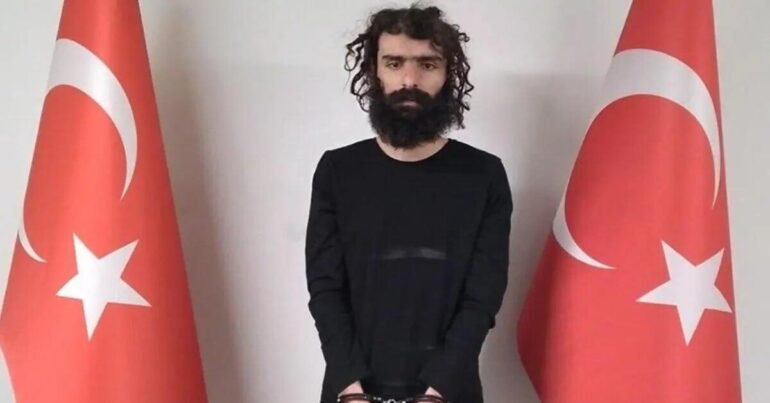

KABUL, AFGHANISTAN – Turkey’s National Intelligence Organization (MIT) has arrested a member of Islamic State Khorasan Province (ISIS-K) in the Afghanistan-Pakistan border region and transferred him to Turkey, Turkish media reported on Friday.
The Turkish newspaper Aksam identified the individual as Ugur Bahadir, also known by the alias Abdullah. According to the report, Bahadir travelled from Turkey to the Afghanistan-Pakistan border region in 2024, where he joined ISIS-K and became involved in the group’s activities. He operated in several ISIS-K camps in the region, carrying out assignments for the group.
During questioning, Bahadir provided information about his contacts with Ozgur Altun, also known as Abu Yasir al-Turki. Altun facilitated the transfer of ISIS members from Turkey to the Afghanistan-Pakistan region and was arrested in 2025 after playing an active role in those movements, the report said.
MIT’s operation disrupted ISIS plans to attack Turkey, exposed the group’s recruitment networks and uncovered its operational plans, according to the report. It did not provide further details about the alleged attack plans or the timing and location of Bahadir’s arrest.
Taliban authorities in Afghanistan and Pakistani officials have not commented on the report.
The reported arrest comes amid ongoing disputes between the Afghan Taliban and Pakistan over the presence of militant groups along their shared border. Taliban authorities have repeatedly claimed that ISIS-K has been largely dismantled in Afghanistan following security operations and that some of its members have relocated to Pakistan’s border regions, where they maintain hideouts and training camps. Pakistan has also repeatedly expressed concern over militant groups operating from Afghan territory, accusing the Taliban of allowing militants to use Afghanistan as a base for cross-border attacks.
Since the withdrawal of U.S. and NATO forces and the Taliban’s return to power in August 2021, ISIS-K has remained one of the most active regional branches of the Islamic State. Despite Taliban claims of suppressing the group, ISIS-K has continued to claim responsibility for high-profile attacks in Afghanistan and elsewhere. Its targets have included Taliban officials, foreign nationals, and members of ethnic and religious minorities, particularly Shi’ite Hazaras and Sufis.
The United Nations and regional countries have repeatedly warned about ISIS-K’s presence and operational capabilities in Afghanistan and the wider region. UN assessments have reported that the group maintains networks in eastern and northern Afghanistan, including parts of Nangarhar, Kunar and Badakhshan provinces.
The assessments have also highlighted the group’s ability to recruit members, coordinate operations and spread propaganda through online platforms in multiple languages, raising concerns about its potential to carry out attacks beyond Afghanistan.