

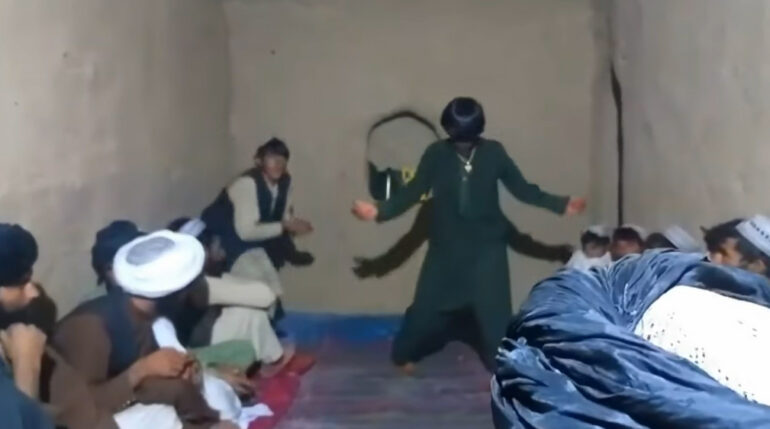

KABUL, AFGHANISTAN – The Taliban continues to recruit children as soldiers and, in some cases, force boys into sexual slavery including the practice of bacha bazi, despite official bans, the U.S. State Department said in its 2026 Trafficking in Persons Report.
The report, released on Thursday, said Taliban authorities recruit children through coercion and fraud, including from schools in Afghanistan and Pakistan, and enrol them in jihadi madrassas that reportedly provide military training.
Other armed groups, including Islamic State Khorasan Province (ISIS-K) and the National Resistance Front, also use children in hostilities, including to plant and detonate improvised explosive devices, carry weapons, conduct surveillance and guard bases, the report said.
“The Taliban and groups such as ISIS-K forcibly use child soldiers and imprison children associated with other armed groups, including potential trafficking victims,” the department said, adding that members of ethnic and religious minority groups, such as Hazara Shia and Ismaili Muslims, are increasingly vulnerable to exploitation.
Afghanistan remains in Tier 3, the lowest ranking in the State Department’s annual trafficking report, indicating that the country does not meet minimum standards for eliminating human trafficking and is not making significant efforts to do so.
During the reporting period, the State Department found a clear pattern of recruiting and using child soldiers in both combat and support roles. It also documented a pattern of sexual slavery through bacha bazi, in which boys are exploited by men for social and sexual entertainment.
The Taliban established a commission comprising senior members to identify and demobilize children within its ranks. However, the report found no evidence that the group enforced bans on underage recruitment or implemented measures to prevent the unlawful use of children in combat and support roles.
“An international organization secured the release of 58 children from their ranks after engagement with the Taliban and supported their reintegration,” the report said.
Bacha bazi remained a serious concern despite being officially banned. Observers reported that Taliban members were perpetrators in some cases. The report noted that cases of the practice have been documented involving the Taliban and nearly all armed groups operating in the country.
“Children are exploited by traffickers in bonded labor, domestic servitude, carpet weaving, brick kilns, herding, agriculture, construction, mining, begging, low-skilled labor, poppy cultivation, salt mining, petty crime, drug and weapons trafficking, truck driving, and hospitality work,” the report said.
Civil society experts indicate that boys are more vulnerable to trafficking than girls, particularly in cases of bacha bazi. Victims are typically between the ages of 10 and 18 and are sometimes kidnapped or sold by impoverished families.
Some impoverished or heavily indebted families sell children to traffickers, force them into labor or begging, or marry underage daughters in exchange for dowry payments or as a means of leaving Afghanistan, according to the report.
Restrictions on women’s and girls’ movement, education and employment have significantly increased their vulnerability to exploitation. Returnees from Iran and Pakistan — particularly women, girls and families associated with the former government — are also identified as highly vulnerable.

