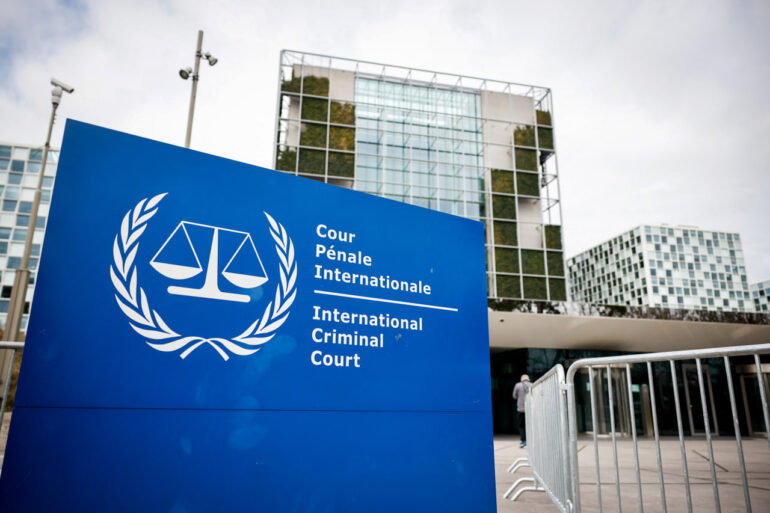

KABUL, AFGHANISTAN – Several Afghan and international civil society organizations raised serious concerns over the International Criminal Court’s (ICC) decision to open a separate investigation into Afghanistan, warning that it could complicate proceedings and limit victims’ access to justice.
In a joint statement on Thursday, October 29, nearly 30 organizations called on the court to explain how the new investigation would affect ongoing inquiries and ensure victims could continue seeking accountability.
According to the statement, The ICC’s Pre-Trial Chamber II on July 15 directed the Office of the Prosecutor to open a separate investigation following a referral by six countries in November 2024. The chamber reaffirmed its decision on September 3 after rejecting the prosecutor’s request for clarification and reconsideration. On October 20, a majority of the court’s Presidency assigned the new case, known as “Situation in the Islamic Republic of Afghanistan II,” to the same chamber.
The organizations questioned the need for a separate investigation, saying the prosecutor’s office had already examined alleged crimes and the court had issued arrest warrants under the original Afghanistan investigation.
“We believe the separation creates complication and uncertainty for victims,” the statement said. “The Court must explain how separation will serve victims’ interests and avoid delays, duplication or disruption to ongoing work.”
The groups also sought clarification on whether the new investigation could affect or lead to the closure of the original Afghanistan investigation.
They warned that allegations of serious crimes committed before August 2021 by the Taliban, international forces and security forces under Afghanistan’s former government could be further sidelined. Some of these allegations were deprioritized by the prosecutor’s office in September 2021.
The organizations also raised concerns that victims who had cooperated with the ICC had not been adequately informed of the decision or given an opportunity to express their views. They said Afghan victims and civil society groups had taken considerable risks in cooperating with the court, with submissions made on behalf of hundreds of thousands of victims.
They also called for meaningful consultation with victims and for states members to provide resources and protect those cooperating with the Court amid U.S. sanctions, which the groups condemned.
“The Court’s procedural arrangements must preserve a meaningful path to justice for victims, particularly Afghan women and girls, across the full scope of the Afghanistan situation,” the statement said.
The signatories included the UK-based Afghan human rights organization Rawadari, the Afghanistan Human Rights and Democracy Organization, MADRE and more than two dozen other Afghan and international groups.
They welcomed the court’s unsealing on 5 October of four arrest warrants issued in 2025 against senior Taliban officials for alleged crimes against humanity of persecution on gender and political grounds. They described the warrants as “an important step towards accountability for victims and survivors targeted by the Taliban’s systematic and systemic gender policies and practices” and called for further warrants.