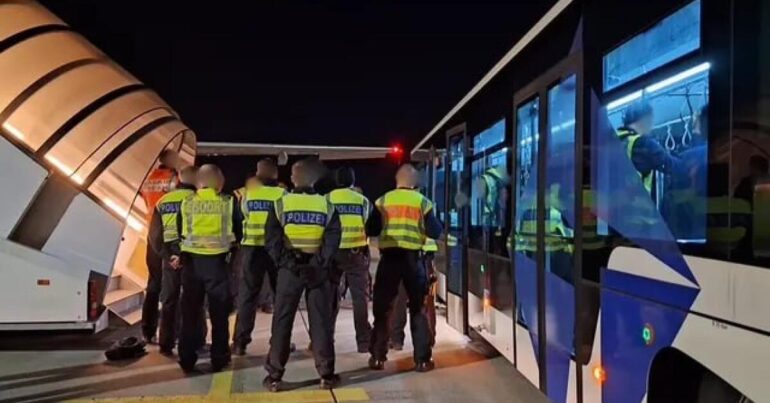

KABUL, AFGHANISTAN – Germany has deported 40 Afghan nationals convicted of criminal offences to Kabul on a direct charter flight, German media reported, as Berlin continues removals despite widespread criticism over returns to Taliban-ruled Afghanistan.
The aircraft carrying the deportees departed from Leipzig/Halle Airport in eastern Germany and landed in Kabul on Wednesday, October 28, according to German newspaper Bild, which cited the country’s Interior Minister Alexander Dobrindt.
The deportees included individuals convicted of sexual offences, violent crimes and drug trafficking, the report said. Many were transferred directly from prison to the airport for deportation.
“Criminals must leave our country. That is one of the reasons why deportations to Afghanistan are a regular and reliable part of our migration policy,” Dobrindt was quoted as saying. “Our course is clear: control, consistency, and a state governed by the rule of law that enforces its decisions,” he added.
The flight is the latest in a series of returns to Afghanistan after Berlin reached an agreement with the Taliban earlier this year to facilitate the process. Dozens of people have been sent back on both charter and regular flights in recent months.
In September, Germany deported 13 Afghans to Kabul. Earlier, 30 Afghan men were returned on June 16, followed by another 31 on July 28. A charter flight carrying 23 Afghan men arrived in Kabul on August 25.
The removals form part of broader efforts across parts of the European Union to increase deportations of rejected asylum seekers and foreign nationals convicted of crimes. In June, the EU hosted a Taliban delegation in Brussels to discuss practical arrangements, including potential cooperation on deportation procedures. Several other European countries are also engaging with the Taliban and seeking agreements on the return of migrants.
The United Nations, some EU politicians and human rights organizations have criticized both the growing number of returns to Taliban-ruled Afghanistan and the increased official contact with the group. They say the country remains unsafe for forced returns and that engagement risks legitimizing a regime responsible for widespread human rights violations.