

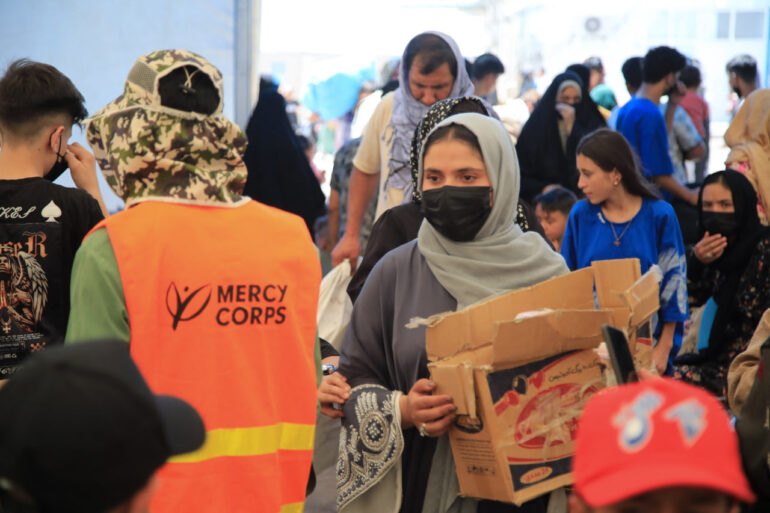

KABUL, AFGHANISTAN – The UK government is set to reopen a refugee resettlement scheme that will prioritize vulnerable Afghan women and girls, Palestinian refugees and people with disabilities, the Guardian reported on Monday.
According to the report, UK Home Secretary Shabana Mahmood is expected to announce the reopening of the UK Resettlement Scheme at the Labour Party conference. The scheme is intended to restore safe and legal pathways for the most vulnerable refugees while maintaining tighter controls on irregular migration across the English Channel. It stopped accepting new referrals in late 2024.
Under the proposal, refugees admitted through the program will receive a faster path to permanent settlement than asylum seekers who arrive via unauthorized routes, including small boat crossings of the Channel.
The UK Home Office expects Afghan women and girls and Palestinian refugees to make up about a quarter of arrivals during the initial phase. Numbers are expected to be limited at first, with an annual cap on admissions.
Eligible refugees will be identified by the UN Refugee Agency (UNHCR) and the International Refugee Assistance Project (IRAP). All will undergo security and criminal-record checks before entering the UK.
The announcement forms part of broader reforms to Britain’s asylum system. Earlier this year, Mahmood introduced measures allowing refugee status to be reviewed every 30 months for up to 20 years. The government has also expanded policies aimed at reducing irregular migration while introducing new community sponsorship and refugee work pathways.
According to the report, Mahmood is also expected to confirm two of three other settlement schemes previously announced. From October, charities and nonprofits will be able to apply to become sponsors, enabling communities and universities to host refugees. The first arrivals under that scheme are expected by autumn next year.
The reopening of the scheme comes as many Afghans remain in neighboring countries after fleeing Afghanistan following the Taliban’s return to power in August 2021. Afghan women and girls continue to face sweeping restrictions on their rights, including access to education, employment and public life, prompting many to leave the country and seek protection or resettlement abroad.

