

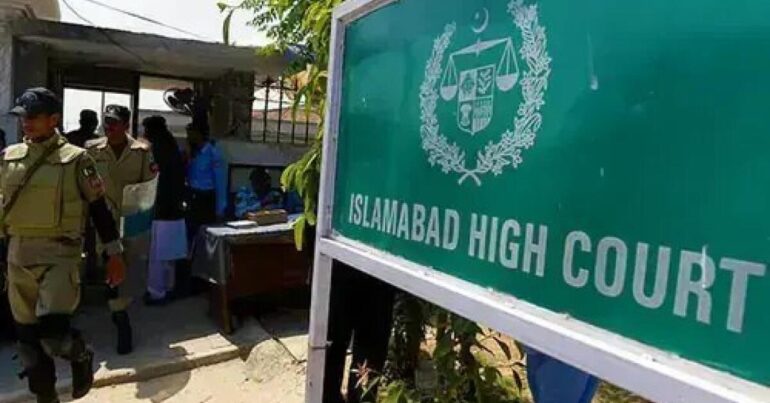

KABUL, AFGHANISTAN – Pakistani media outlets have reported that a judge at the Islamabad High Court has questioned both the case seeking extensions of student visas for 87 Afghan students and the legal standing of the lawyer representing them.
According to Dawn Newspaper, Justice Khadim Hussain Soomro, during a court hearing, questioned the lawyer representing the students, saying: “Sir, we are currently at war with the Afghans. If Indian students come, will you allow them to come too?”
The judge reportedly told the Afghan students that instead of approaching the court, they should contact the Taliban embassy in Islamabad, which could then communicate with the Pakistani embassy to address the matter.
The lawyer told the court that the students had entered Pakistan in 2023 on one-year student visas, when Pakistan’s policy toward Afghan students was different.
Dawn reported that the judge also questioned the lawyer’s authority to represent the students, asking: “Under which law have you taken power of attorney from these 87 Afghan students?”
The case concerns the visa extensions of 87 Afghan students who entered Pakistan in 2023 but are now reportedly unable to renew their visas under a new Pakistani government policy.
Amid heightened tensions with the Taliban, the Pakistani government has decided not to extend the stay of Afghan nationals and has intensified efforts to deport them.
The Islamabad High Court has adjourned the hearing of the case to a later date.
Relations between Pakistan and the Taliban administration have increasingly deteriorated in recent years, largely due to Islamabad’s concerns over the Tehreek-e-Taliban Pakistan (TTP), which Pakistan says maintains bases in Afghanistan and uses Afghan territory to plan and carry out attacks inside Pakistan.
Islamabad has repeatedly accused the Taliban authorities of providing shelter to TTP leaders and fighters. The Taliban, however, deny the allegations, insisting that Afghan territory is not being used against other countries and that the TTP insurgency is an internal matter for Pakistan.
The dispute has fueled growing tensions between the two neighbours, including Pakistani air strikes inside Afghanistan and periodic armed clashes along their shared border.
Against this backdrop, Pakistan has also intensified its pressure on Afghan nationals living in the country. Islamabad launched the Illegal Foreigners Repatriation Plan (IFRP) in November 2023, under which Afghan nationals without valid legal status were targeted for deportation.
On July 10, 2026, Pakistani authorities issued a directive ordering the immediate arrest and accelerated deportation of Afghan nationals who did not hold valid visas.
According to the UN Refugee Agency (UNHCR), more than 2.5 million Afghans have returned to Afghanistan under the IFRP, with many of the returns taking place involuntarily. The United Nations has also warned that more than 70,000 Afghan refugees remain at immediate risk of deportation. Overall, approximately 6 million Afghans returned to Afghanistan from Pakistan and Iran between 2023 and 2026.
Pakistan’s tightened policies have also affected Afghan students. Pakistani authorities have halted the extension of student visas for Afghan students, including students who entered the country legally under previously issued student visas. The policy has left many Afghan students facing uncertainty over their legal status and their ability to continue their education in Pakistan.

