

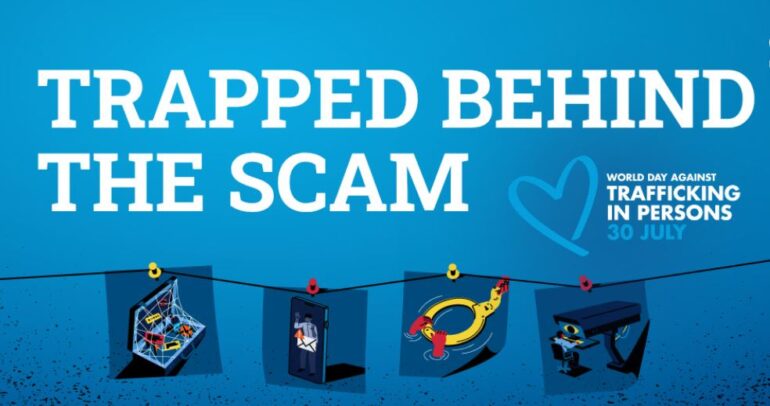

KABUL, AFGHANISTAN – The United Nations Office on Drugs and Crime (UNODC) and the International Organization for Migration (IOM) have called for stronger action to address growing risks of human trafficking in Afghanistan, warning that overlapping crises have increased people’s vulnerability to exploitation.
In a joint statement marking the World Day Against Trafficking in Persons, the UN agencies emphasized the need for coordinated efforts to prevent human trafficking, identify and support victims and survivors, and strengthen measures against individuals and networks that facilitate and profit from exploitation.
“Afghanistan’s overlapping crises, including the large-scale forced return of Afghans from neighboring countries, the reduction of the rural opium-based economy, severe cuts in humanitarian aid, natural disasters, and continued restrictions imposed on women and girls’ rights, increase individuals’ vulnerabilities to human trafficking and exploitation,” the UN agencies said.
Afghanistan has seen large-scale population movements in recent years. Nearly six million Afghans have returned from neighboring countries since late 2023, according to UN figures, adding pressure on communities with limited resources. Thousands more have been displaced internally by conflict, economic hardship, and natural disasters.
Many returnees arrive with few resources and struggle to access jobs, housing, and basic services. Only 11% of assessed returnees are employed or own a business, while 56% cannot meet basic living expenses and rely on debt or assistance, the agencies said.
The agencies warned that these conditions can increase the risk of exploitation, as traffickers often target those facing economic desperation. Vulnerable Afghans may be pushed into unsafe work, forced labour, debt bondage, sexual exploitation, forced marriage, child exploitation, or other forms of abuse.
“Current pressures on the Afghan population, such as mass returns, opium eradication without alternative livelihoods, aid cuts, natural disasters, and restrictions on women, make men, women, and children more vulnerable to human trafficking and exploitation,” said Polleak Ok Serei, UNODC’s representative in Afghanistan. He called for stronger prevention, better victim identification, and expanded protection services.
Mihyung Park, IOM’s chief of mission in Afghanistan, said the scale of returns had exceeded what many communities could absorb without major international support. “Without viable opportunities at home, people are more likely to resort to dangerous and irregular journeys, increasing their vulnerability to trafficking, smuggling, exploitation, and abuse,” she said.
The agencies said efforts should prioritize early identification of trafficking victims, access to protection and support, and treating survivors as victims rather than offenders. They also stressed the need for awareness campaigns on trafficking risks and deceptive recruitment, plus expanded training for border officials, law enforcement, and service providers.
Regional cooperation will be critical, the statement said, noting that trafficking networks often operate across borders and exploit vulnerable migrants moving through neighboring countries. UNODC has been working with regional partners to strengthen legislation, law-enforcement capacity, and information-sharing mechanisms aimed at disrupting trafficking and migrant-smuggling networks, according to the statement.
UNODC and IOM said a coordinated, victim-centered approach involving governments, civil society, and international partners would be essential to reducing trafficking risks and protecting vulnerable Afghans.

