

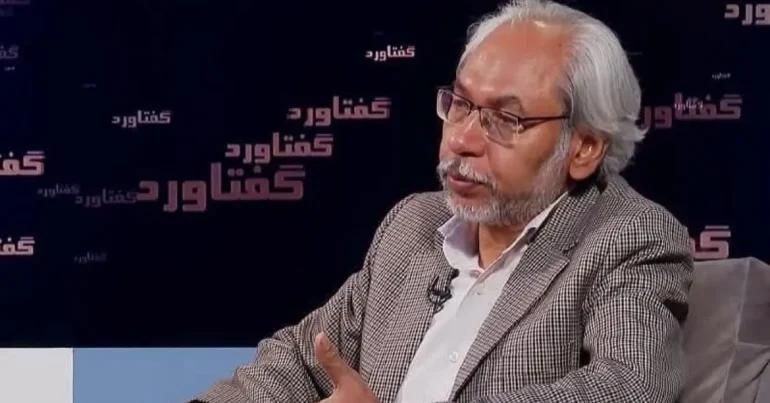

KABUL, AFGHANISTAN – The Afghanistan Media Support Organization (AMSO) has raised concern over the “alarming” health condition of Mohammad Rahmati, managing director of private broadcaster Tamadon TV, in Taliban custody, saying he is in urgent need of medical treatment.
Mohammad Rahmati and his colleague Mohammad Reza Ehsani were arrested by Taliban justice ministry forces following a raid on Tamadon TV’s offices in Kabul on June 23, shortly after the broadcaster criticized the Taliban’s actions against it, according to the Afghanistan Journalists Center.
Taliban authorities suspended the station’s broadcasts, sealed its offices, and confiscated equipment, which was transported away. Authorities accused Tamadon TV of being affiliated with a political party and claimed its building was constructed on state-owned land — allegations denied by station officials.
In a statement on Friday, AMSO said sources close to Mohammad Rahmati reported that his health had worsened in detention and that he needed immediate access to treatment.
“The continued detention of an ill journalist not only violates the principle of media safety and protection but also constitutes a clear act of inhuman treatment,” the group said.
Tamadon TV itself had earlier voiced concern over Rahmati’s health, warning that any harm to him would be the direct responsibility of those who ordered his detention without “legal grounds.”
AMSO further highlighted the Taliban’s broader pattern of arrests, detentions and abuse of journalists and media workers, describing it as a serious violation of freedom of expression and international press freedom principles.
The organization also condemned the continued detention of several other journalists, including Bashir Hatif, Shakib Ahmad Nazari, Wahid Farhadi, Abuzar Sarem Sarpoli, Aziz Watanwal and Ahmad Javid Niazi, saying prolonged detention has created an atmosphere of fear and censorship across Afghanistan’s media sector.
AMSO urged Taliban authorities to clarify the fate of Mohammad Rahmati, Mohammad Reza Ehsani, and other detained journalists, and to release them immediately and unconditionally. The organization appealed to the United Nations, the international community, and press freedom groups to step up pressure on the Taliban to protect journalists and uphold media rights in Afghanistan.
Other media watchdogs, including the Afghanistan Journalists Center and the Committee to Protect Journalists, have also called for the immediate release of Rahmati and Ehsani and for Tamadon TV to be allowed to resume operations.
Founded in 2006 in Kabul by the late Shiite cleric Asif Mohseni, Tamadon TV broadcast news, religious programs, and cultural content before its suspension by the Taliban. The channel had previously faced restrictions and temporary closures under Taliban rule over ownership and editorial disputes.
The latest case adds to mounting pressure on Afghan media since the Taliban’s return to power in August 2021. Media watchdogs say dozens of media outlets have closed, while journalists face tighter censorship, threats, and arbitrary detention.
According to the AFJC, the Taliban have arrested and detained at least 300 journalists and media staff since 2021 for alleged violations of the group’s strict media regulations, with at least seven still held in custody. In Reporters Without Borders’ 2026 World Press Freedom Index, Afghanistan ranked 175th out of 180 countries, among the lowest globally.

