

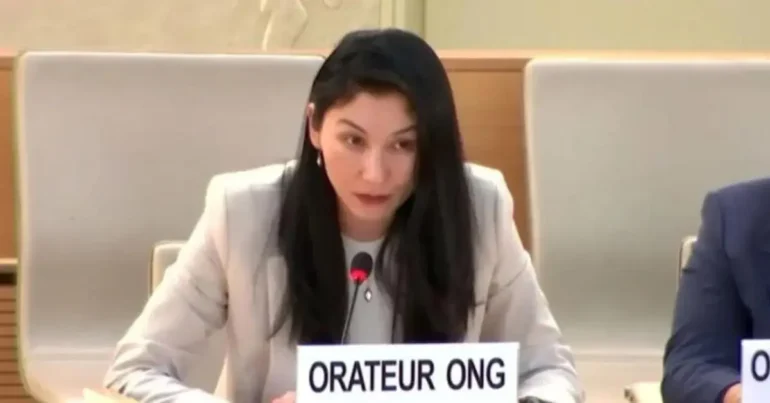

KABUL, AFGHANISTAN – Fereshta Abbasi, South Asia researcher at Human Rights Watch, says the European Union should not reach any agreement with the Taliban regarding the forced deportation of migrants to Afghanistan.
In a statement published today (Wednesday, July 8), Abbasi said that such an agreement would expose deportees to persecution and abuse by the Taliban.
She said that while the European Union describes the June 22 meeting in Brussels as a “technical meeting,” the Taliban have called it a “historic visit” and a step toward regulating consular relations with EU member states.
Abbasi added that if the European Union and its member states want their Afghanistan policy to remain credible, they should halt all forced returns to Afghanistan.
She stressed that the European Union should use engagement to pressure the Taliban to respect people’s rights and ensure accountability, rather than normalize forced returns to a place where deportees are likely to face persecution and abuse.
Abbasi argued that Afghanistan is unsafe for anyone facing forced deportation, pointing to substantial evidence that people returned to the country have been detained and subjected to torture by Taliban security forces.
She added that international law prohibits states from participating in refoulement—the forced return of individuals to a place where they face a real risk of persecution, torture, other forms of ill-treatment, or threats to their lives.
According to her, the problems faced by people returning to Afghanistan are not limited to persecution and abuse. Returnees also face a lack of resources and access to shelter, and struggle to survive.
The Human Rights Watch researcher called for a change in the European Union’s policy toward its engagement with the Taliban.
She said that the current approach reflects a “profound contradiction,” as the European Union condemns the Taliban’s abuses while simultaneously cooperating with them to deport people to a dangerous environment under Taliban control.
Two weeks ago, the European Union hosted a five-member Taliban delegation in Brussels led by Abdul Qahar Balkhi, the group’s Foreign Ministry spokesperson. It drew widespread criticism from human rights groups, UN experts, EU lawmakers, and Afghan women who warned that the engagement risked legitimizing the group.
The European Commission, which hosted the meeting, said it had invited the Taliban at the request of member states to discuss “technical issues” related to the deportation of migrants to Afghanistan.
However, after the meeting, Balkhi described it as a historic meeting and announced that consular cooperation with European Union member states would begin.
The meeting marked the first time the EU has hosted a Taliban delegation since the group seized power in Afghanistan in August 2021. It sparked strong backlash from critics, who argue that any formal contact with the Taliban risks legitimizing the group, which has been accused of widespread human rights abuses, particularly against women and girls.
Her remarks also come amid continued reports of abuses by the Taliban against former government officials, civil society activists, and other civilians. According to a recent human rights report, at least 80 former government employees were specifically targeted in 2025, slightly fewer than in 2024, while 40 civilians were killed by Taliban forces after being accused of cooperating with opposition groups. Although lower than the 2024 figure, the number was nearly double that recorded in 2023.
The report also documented 11 deaths in Taliban-controlled prisons following severe torture, compared with 20 such cases in 2024.
The report further highlighted a sharp increase in arbitrary detention and enforced disappearances. At least 2,559 people were unlawfully detained in 2025—more than double the 885 cases recorded in 2024 and nearly four times the number documented in 2023. Those detained included 138 former government employees, 77 civil society members and human rights defenders, including seven women, and 192 individuals accused of links to opposition groups.
Since returning to power in 2021, the Taliban have imposed sweeping restrictions on women and girls, including bans on secondary and higher education and limits on employment and public life. Human rights groups and UN experts have described the measures as amounting to “gender apartheid.”

