

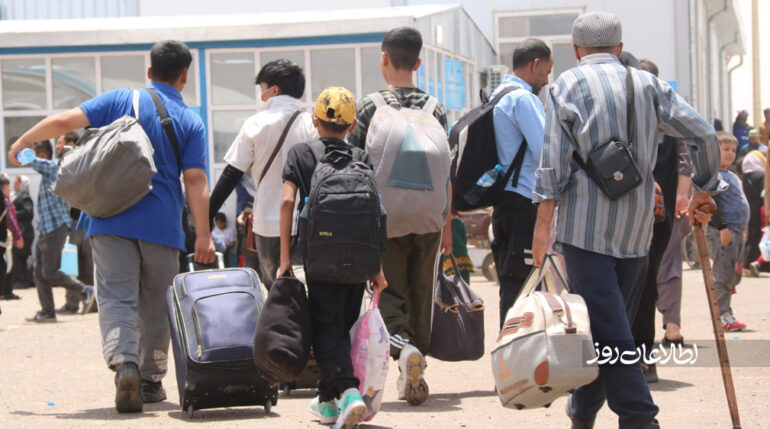

KABUL, AFGHANISTAN – Afghan migrants in Iran are facing mounting administrative and judicial obstacles due to tightened security measures, a situation that has left many, especially women and children, vulnerable to legal uncertainty and reduced access to justice, according to an Iranian human rights group.
In its report, the Geneva-based HANA Human Rights Organization detailed how recent armed conflict, heightened security operations, disruption of public services, internet shutdowns, and intensified law-enforcement pressure on Afghan nationals have compounded existing difficulties.
The organization said many Afghan migrants are currently unable to register essential civil status events such as marriages, divorces, births, parentage, and other family relationships, due to the absence of effective and accessible registration mechanisms.
Women and children are bearing the brunt of the situation, facing heightened risks including domestic violence, unregistered marriages, denial of legal protection, lack of official identity documents, and greater exposure to exploitation, HANA said.
Although Iran’s Constitution and Civil Code contain provisions for the protection of foreign nationals, the group highlighted a significant gap between these legal safeguards and their actual implementation by authorities.
“Article 5 of the Iranian Civil Code provides that all persons residing in Iran, whether Iranian or foreign nationals, are subject to Iranian law,” the report stated. “Article 7 further recognizes that foreign nationals residing in Iran are, within the limits of applicable treaties, governed by the law of their own state in matters of personal status.”
The HANA report warned that the current policies are inconsistent with Iran’s international obligations, including the prohibition of discrimination, the right to recognition as a person before the law, access to justice, protection of the family, and the principle of the best interests of the child.
The group stressed that no individual should be denied registration of fundamental life events, judicial protection, or effective access to justice solely based on nationality or immigration status. It urged Iranian authorities to take immediate steps to ensure all migrants, regardless of legal status, can register civil documents and access judicial remedies.
The rights group warned that continued restrictions in the post-conflict security environment risk deepening legal uncertainty among Afghan migrants and significantly increasing systematic violations of the fundamental rights of women and children.
Iran is home to one of the world’s largest Afghan migrant and refugee populations, including both documented and undocumented individuals. Large numbers have fled Afghanistan over decades of conflict, economic hardship, and political instability, with many arriving after the Taliban seized power in August 2021.
Iranian authorities have expanded security measures and deportation operations in recent months, detaining and returning hundreds of undocumented Afghan migrants daily to Taliban-ruled Afghanistan.
International organizations, including the United Nations, have repeatedly voiced concern over the treatment and protection of Afghan refugees and migrants, calling on states to ensure that migration enforcement respects international human rights and refugee law.

