

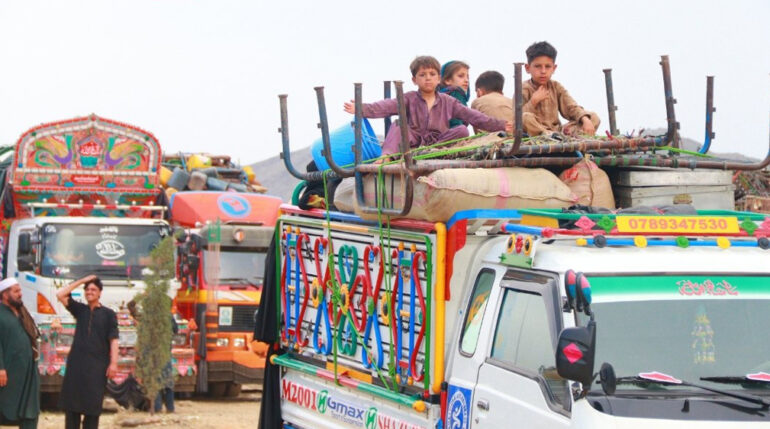

KABUL, AFGHANISTAN – The Taliban say 253 Afghan migrant families, comprising 1,279 people, have returned to Afghanistan through multiple border crossings and received transportation, financial, and humanitarian assistance.
In a statement released by the Secretariat of the High Commission for Addressing Returnees’ Issues, the Taliban said that 198 families, totaling 1,026 people, entered the country through the Torkham crossing in eastern Afghanistan.
According to the statement, 43 families returned through the Spin Boldak crossing in southern Afghanistan, 10 families entered via the Islam Qala border in western Afghanistan, and two families crossed through the Bahramcha border in southern Afghanistan.
The latest returns come as Pakistan intensifies its campaign against undocumented foreign nationals. Last week, Pakistan’s Ministry of Interior directed authorities to begin arresting undocumented Afghan migrants from July 10 and ordered the immediate detention of all foreigners residing in the country without valid visas.
The ministry also instructed provincial authorities to submit daily reports detailing the number of undocumented Afghan nationals identified, the measures taken against them, and their current status as part of the government’s Illegal Foreigners Repatriation Plan.
The announcement also comes as the forced deportation of Afghan migrants from Pakistan and Iran continues, placing additional pressure on Afghanistan’s already fragile economy and humanitarian situation.
Aid organizations have repeatedly warned that the growing number of returnees is increasing demand for shelter, employment, healthcare, and other basic services across the country.
Afghanistan has experienced a sharp increase in returns since late 2023 as Pakistan and Iran have intensified enforcement against undocumented Afghan migrants. UN figures indicate that more than 5.4 million Afghans have returned or been deported from the two countries combined since October 2023, with around 2.9 million in 2025 alone.
Nearly 150,000 Afghans have returned from Pakistan and Iran so far in 2026, according to data from the UN refugee agency (UNHCR), adding pressure on already limited resources inside Afghanistan.
The deportations coincide with the ongoing conflict between the Taliban and Pakistan. Islamabad closed key border crossings in late February following the outbreak of the conflict, disrupting trade and travel, before reopening them in recent days primarily to facilitate deportations. Other forms of cross-border movement remain largely restricted.

