

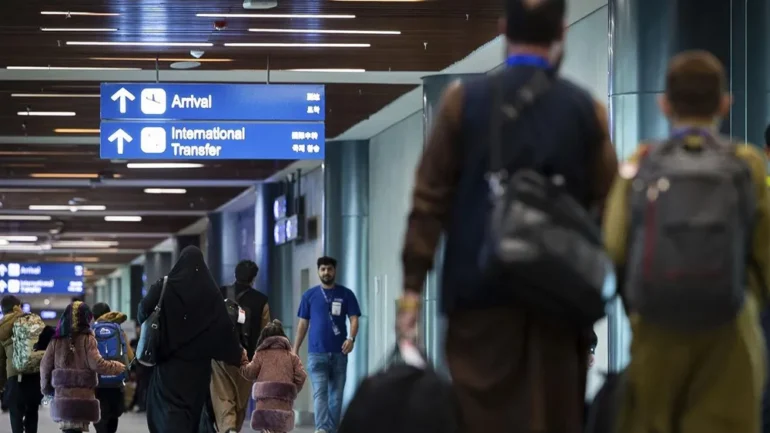

KABUL, AFGHANISTAN – The U.S. Citizenship and Immigration Services (USCIS) announced that, following a federal judge’s order, it will resume processing refugee and immigration-related applications.
In a statement released on Friday (June 12), the agency said that although it disagrees with the ruling issued by the chief judge in Providence, Rhode Island, it will comply with the order “pending further judicial review.”
USCIS stated that the final federal court order was issued last Thursday and that the agency and its partners are currently complying with it.
The latest development follows a federal court ruling issued last week by Chief Judge John McConnell in Rhode Island, who found that the Trump administration had unlawfully restricted access to immigration benefits for citizens of 39 countries, including Afghanistan.
The restrictions were introduced in late 2025 after a shooting incident involving an Afghan national, prompting the administration to suspend or delay the processing of asylum applications, work permits, green cards, and other immigration benefits for nationals of countries deemed “high-risk.”
The judge ruled that the policy violated U.S. immigration and administrative laws and left thousands of applicants in prolonged legal uncertainty. Afghan nationals were among the hardest hit, including former employees of U.S. military and aid programs whose immigration cases were frozen despite having undergone extensive security vetting.
Following that ruling, USCIS announced on Friday that it would resume processing affected cases while further legal proceedings continue. The decision is expected to provide relief to thousands of applicants, including Afghan refugees and Special Immigrant Visa (SIV) beneficiaries, although the Trump administration is expected to appeal the court’s decision in higher courts.
The court’s decision is expected to have significant implications for thousands of immigrants and refugees whose applications had been delayed or suspended under these policies. For Afghan applicants in particular, including SIV holders and those seeking humanitarian protection, the resumption of case processing may provide renewed hope for legal pathways to safety and permanent status in the United States, although the outcome of further legal challenges remains uncertain.
Overall, the immigration policies of the Trump administration have been characterized by a stricter and more security-focused approach, with an emphasis on tightening vetting procedures, limiting refugee admissions, and restricting entry from countries considered high-risk.
These measures were often justified on the grounds of national security and border control, and were implemented through a series of executive actions and policy directives that significantly reshaped the U.S. immigration system. As a result, many immigration processes became slower and more restrictive, creating prolonged uncertainty for asylum seekers, refugees, and applicants from conflict-affected regions, including Afghanistan.

