

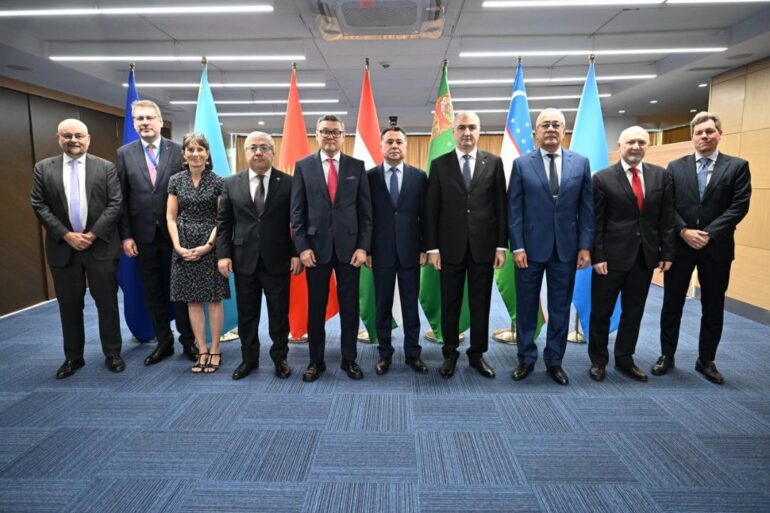

KABUL, AFGHANISTAN – Envoys from the European Union and Central Asian countries, along with representatives of the United Nations, met in Almaty, Kazakhstan, on Monday to discuss recent developments in Afghanistan and their implications for the region.
The meeting brought together delegations from Kazakhstan, the Kyrgyz Republic, Tajikistan, Turkmenistan, and Uzbekistan, along with representatives of the EU and the UN, The Astana Times, citing the Kazakhstan foreign ministry, reported.
According to the report, participants reviewed developments in Afghanistan and discussed their impact on regional security, emphasizing the need for coordinated international engagement. A key theme was the expansion of transport and transit routes through Afghanistan to enhance trade between Central and South Asia and strengthen ties with Europe.
Discussions also focused on the economic, social, and humanitarian situation, water management and climate change, human rights, including the rights of women and girls, as well as trade, connectivity, and broader regional cooperation, according to the EU office in Kazakhstan.
The envoys highlighted the central role of the UN in coordinating humanitarian and development assistance to Afghanistan, where aid agencies continue to face significant operational and funding constraints.
The meeting took place one day before a separate regional gathering hosted by the Taliban in Kabul on Tuesday under the title “Afghanistan–Central Asia Think Tank Forum.” That meeting brought together officials and experts from Central Asian countries and Azerbaijan to discuss regional connectivity and economic cooperation, according to Taliban authorities, though details of outcomes have not been released.
The discussions come as Taliban-ruled Afghanistan continues to grapple with multiple crises, including humanitarian, economic, and human rights challenges. Millions of people remain dependent on international aid amid significant cuts in foreign funding, while women and girls remain largely excluded from public life due to Taliban restrictions.

