

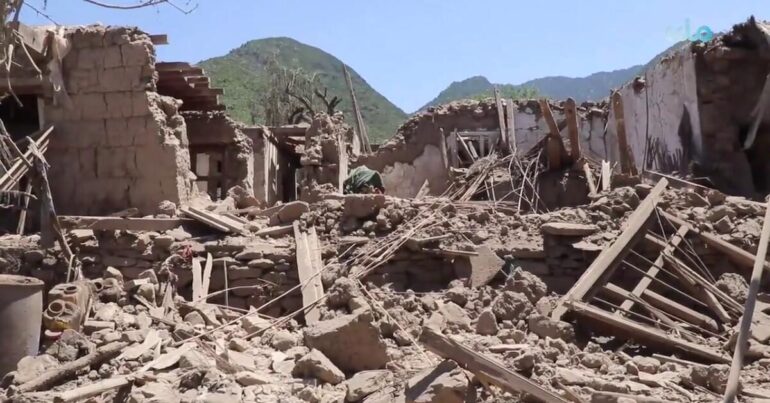

KABUL, AFGHANISTAN – The United Nations Assistance Mission in Afghanistan (UNAMA) says it has verified the deaths of at least 13 civilians, most of them women and children, and the injury of 10 others in recent Pakistani airstrikes in eastern Afghanistan.
UNAMA said in a statement posted on X on Thursday that the strikes took place in the provinces of Khost, Kunar, and Paktika during the night of June 9-10.
The UN mission expressed concern over the impact on civilians and reiterated its call for de-escalation, protection of civilian lives, a durable ceasefire, reopening of border crossings — especially for humanitarian aid — and dialogue to resolve differences.
Taliban spokesperson Zabihullah Mujahid said that the airstrikes hit residential areas in the three provinces, killing 13 civilians, including 11 children, one woman, and one elderly man, while injuring 14 others. He strongly condemned the attacks as a “humanitarian crime and act of aggression.”
Pakistan’s Information Minister Ataullah Tarar confirmed the military operation, describing the strikes as “precise” and aimed at hideouts of the Tehrik-e-Taliban Pakistan (TTP). Tarar said 26 TTP militants were killed and at least four targets were destroyed, including a training center and an ammunition cache. He said the operation was in response to recent terrorist attacks inside Pakistan.
The latest airstrikes mark another escalation in the deteriorating relationship between Pakistan and the Taliban authorities. The current cycle of cross-border military actions began in October last year and intensified sharply in February, resulting in hundreds of civilian casualties and heightened tensions along the frontier.
The border crossings between the two neighbors have remained largely closed since October, disrupting trade, cross-border travel, and humanitarian operations that rely on access through Pakistan.
Islamabad accuses the Taliban of harboring TTP leaders and militants, who it says use Afghan territory to plan and launch attacks inside Pakistan. The Taliban reject the allegations, saying no such groups operate from Afghanistan and that Pakistan should address its security issues internally.
Efforts by regional states and tribal elders along the border to broker peace have so far failed to produce a lasting agreement. International calls for restraint and dialogue from countries including Russia, China, Iran and Saudi Arabia have not stopped the violence. Pakistan has said it will maintain its campaign, known as “Operation Ghazab Lil Haq,” against militant bases in border areas.

