


KABUL, AFGHANISTAN – Pakistan on Thursday welcomed recent ceasefire efforts by tribal elders on both sides of the border, but said militant elements operating inside Afghanistan continue to threaten regional stability and hinder relations between the two neighboring countries.
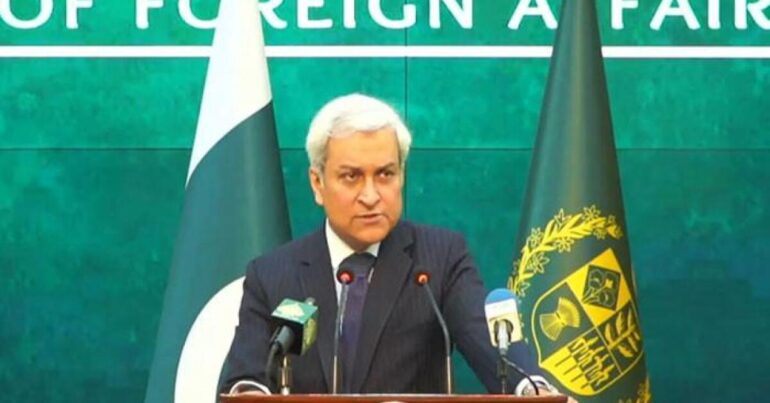
Pakistan’s Foreign Ministry spokesperson Tahir Andrabi said in his weekly briefing that recent agreements reached by tribal elders on both sides of the border reflect a strong desire among local communities to end violence and restore stability in border areas.
“The only problem is that while aspirations of the people, particularly of the adjoining provinces of Afghanistan with Pakistan, those people yearn for peace; the fact is that within the territory of Afghanistan, the elements are operative, who are against peace, fomenting, engineering, planning terrorist attacks in Pakistan,” Andrabi said.
He questioned the Taliban’s ability to control these groups, which he said operate with impunity and at times with local complicity. “International reports have also confirmed that there is an environment of impunity and operational space for these terrorist elements in Afghanistan,” he added.
Andarabi emphasised that Pakistan and Afghanistan share deep religious, ethnic, and cultural bonds, with populations holding similar aspirations for peace and no major underlying disputes. Nevertheless, cross-border terrorism remains the central barrier to normal relations, Andrabi said.
“It is important for Kabul to understand that there must be a zero tolerance policy toward any terrorist activity against Pakistan originating from Afghanistan,” he said. “Once the Taliban provide firm written guarantees that Afghan soil will not be used for attacks against Pakistan, other issues such as border closures, visa restrictions, and trade blockages could be resolved more easily,” he added.
Earlier this week, tribal elders from Kunar Province and Bajaur District reached a ceasefire agreement aimed at reducing tensions along the border following weeks of clashes between Taliban and Pakistani forces.
Under the agreement, both sides are required to return to their previous positions and refrain from crossing or violating each other’s territory. The elders also agreed that authorities on each side would be held responsible for attacks originating from areas under their control.
A similar ceasefire agreement was earlier reached between tribal elders from Chitral District and Nuristan Province. Following that agreement, several transport routes in Nuristan that had been closed by Pakistan were reopened.
Clashes between Pakistani security forces and Taliban fighters have continued intermittently for more than two months. Broader trade, transit and land travel between the two neighbours have been suspended for around eight months following a previous round of border clashes last year.
Pakistan has long accused the Afghan Taliban of providing safe havens to militant groups, particularly the Tehrik-i-Taliban Pakistan, and allowing them to plan and carry out attacks inside its territory. The Taliban reject these allegations, saying insecurity in Pakistan is due to shortcomings within Pakistani security forces.

