

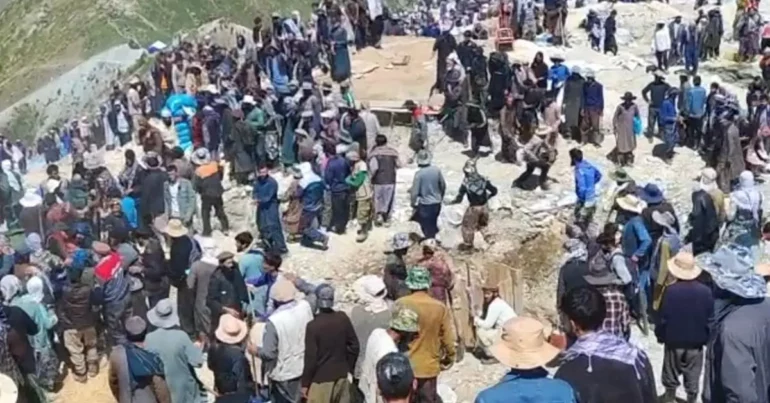

KABUL, AFGHANISTAN – Local sources in Badakhshan say that at least two people have been killed and several others injured following clashes between local residents and individuals affiliated with the Taliban in Shaki district of the province.
According to sources, the clashes began yesterday (Saturday, May 9) between armed men affiliated with “Abdul Fattah” and “Musa Kakar,” local commanders, and residents of the “Shirin Nazm” village in Shaki district over the extraction of a gold mine.
Sources say the men affiliated with the two commanders entered the village, destroyed the residents’ mining equipment, and beat them. The clashes began after residents resisted.
Sources had initially reported that four people were injured in the clashes, but later said that two people were killed and at least 15 others were wounded.
Sources say that “Abdul Fattah,” the brother of Juma Fateh, the Taliban deputy governor of Zabul, and “Musa Kakar” are “irresponsible armed individuals” and do not hold official positions in Taliban institutions.
According to reports, these individuals have also carried out mass arrests of local residents and have so far detained around 15 people.
KabulNow cannot independently confirm the casualty figures from the clashes.
Local Taliban officials in Badakhshan have not yet commented on the clashes.
The clashes occurred while, over the past two days, residents of the “Atan Jelo” village in Argo district of Badakhshan were also involved in clashes with the Taliban over the destruction of poppy fields. At least two local residents were killed and several others injured in those clashes.
Local residents accuse the Taliban of harassing them “under the pretext” of destroying poppy fields and treating them in an “insulting” and “humiliating” manner.
Residents of Badakhshan in northeastern Afghanistan have repeatedly clashed with Taliban forces in recent years over the destruction of poppy fields. In previous years, several local residents were also killed and injured in shootings by the Taliban’s counter-narcotics forces. The main centers of these clashes have been Darayim and Argo districts.
The latest confrontation reflects deep-rooted tensions in Badakhshan, where repeated anti-narcotics crackdowns have often collided with the economic realities of local communities that depend on poppy cultivation for survival. The recurring clashes also highlight broader grievances over governance, local treatment by authorities, and the lack of viable economic alternatives for rural residents in the province.
These incidents reflect a long-standing cycle of mistrust between local residents and authorities, where economic hardship, limited livelihood alternatives, and strict enforcement measures have contributed to recurring protests and clashes. Critics argue that heavy-handed approaches to enforcement have at times intensified local resentment, while authorities maintain that the operations are part of national efforts to curb drug production.

