

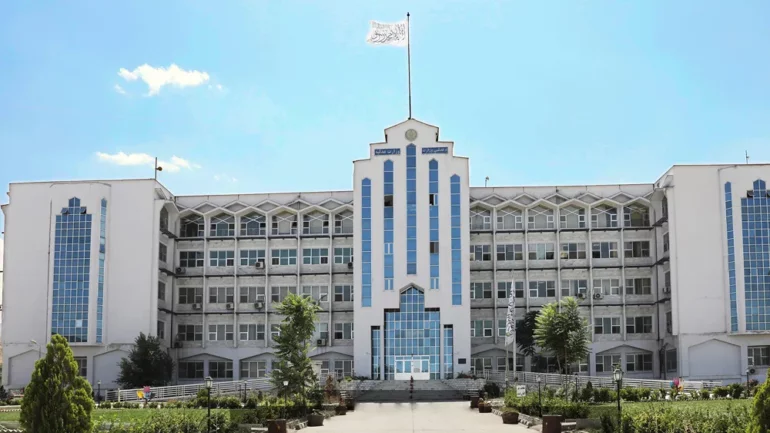

KABUL, AFGHANISTAN – The Taliban’s Ministry of Justice says that, based on a ruling by the group’s special court, 841.254 jeribs of land (approximately 1.68 square kilometers) in the village of Alokhail, District 16 of Kabul city, has been confirmed as “state-owned.”
In a statement released today (Wednesday, April 29), the ministry said that the “Special Court for Addressing Cases of Usurped State Lands in the Central Zone,” after reviewing documents and records, decided that all of this land is “state-owned.”
The Taliban’s Ministry of Justice added that “the said land includes two cadastral plots, and the Commission for the Prevention of Land Usurpation and Restitution of Usurped Lands had previously examined the case and officially referred the file of the aforementioned land to the Special Court for Addressing Cases of Usurped State Lands in the Central Zone, based on Article 17 of the Law on Prevention of Land Usurpation and Restitution of Usurped Lands.”
According to the statement, the special court “after carefully reviewing the documents and records of the occupants and the commission, land registration offices, and obtaining information from relevant departments, determined that based on cadastral documents, these two plots of land had been registered and surveyed in the name of the state.”
The Ministry of Justice wrote that “after examining all documents and evidence, the court ruled that the entire land in question is state-owned and should be handed over to the Commission for the Prevention of Land Usurpation and Restitution of Usurped Lands.”
A few days ago, the Taliban also declared more than 1,500 jeribs of land (approximately 3.00 square kilometers) in the “Omid Sabz Township” in western Kabul as “state-owned.”
According to a statement published three days ago, the Ministry of Justice said that 1,507.49 jeribs of land (approximately 3.01 square kilometers) in Omid Sabz Township had been reviewed by the same special court, which concluded that all of the land, consisting of five cadastral sections, had been registered and surveyed in the name of the state and had not been transferred to any individual or legal entity.
Since regaining control of Afghanistan, the group has initiated a process of reviewing townships in various cities and provinces and has declared several large townships as “state-owned.” However, township owners say that Taliban courts do not pay attention to their documents during the case review process and that these documents are not examined carefully or impartially.
These developments come amid ongoing concerns over property rights and legal transparency in Afghanistan, as critics argue that the lack of an independent judicial system and limited oversight mechanisms may undermine confidence in land adjudication processes and increase disputes between authorities and private landowners.

