

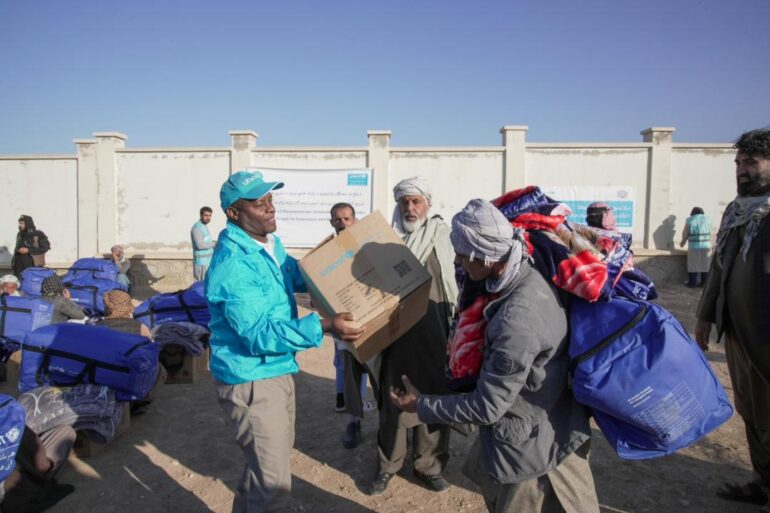

KABUL, AFGHANISTAN – Humanitarian aid in Afghanistan could face disruptions in the final months of 2025 due to a significant funding shortfall, the UN warned, threatening the delivery of essential supplies to millions of people.
In its new assessment, the UN Office for the Coordination of Humanitarian Affairs (OCHA) said aid pipelines for food, water, education, nutrition and health services may face breaks in the final quarter of 2025.
“Between Oct–Dec 2025, critical food, education, nutrition and WASH supplies are at risk of pipeline breaks due to funding gaps,” OCHA said. “Immediate and sustained funding is crucial to ensure the efficient delivery of core humanitarian items.”
According to the report, the Food Security and Agriculture Cluster, Education Cluster, and WASH Cluster face high risk of supply interruptions, requiring $124.7 million, $6.5 million, and $1.2 million, respectively, to meet stock needs through December.
OCHA said urgent financing is needed to maintain critical supplies, warning that shortages could affect communities already heavily dependent on aid.
Afghanistan continues to grapple with one of the world’s most severe humanitarian crises, with more than half of the population dependent on foreign aid. Recent earthquakes in the north and east, along with large-scale deportations of Afghan refugees from neighboring countries, have worsened the situation.
Meanwhile, Humanitarian operations have struggled with funding shortfalls in recent years. The suspension of U.S. aid, Afghanistan’s largest donor, following Donald Trump’s return to the White House, has further strained relief efforts. The UN’s $1.6 billion humanitarian appeal for 2025 is under 40% funded with only weeks left in the year.
UN agencies and aid organizations continue to call for immediate and sustained support, warning that millions of Afghans, including women and children, face deteriorating conditions as winter approaches.

