

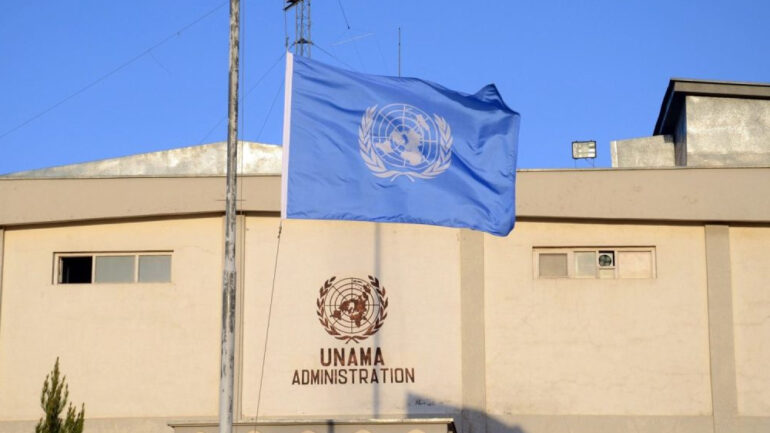

KABUL, AFGHANISTAN – The UN Assistance Mission in Afghanistan (UNAMA) has expressed concerns over the recent detention of women and girls by the Taliban in Kabul for Hijab non‑compliance.
Last week, Taliban forces detained dozens of young women and girls in various neighborhoods of the capital, including Dasht-e Barchi, Shahr-e Naw, Qala-e-Fathullah, and Kote Sangi, accusing them of violating strict hijab rules.
Witnesses told local independent media outlets that the detainees were forcibly taken from public places such as markets, cafes, and even hospitals, with some describing violent treatment by the Taliban’s Ministry for the Promotion of Virtue and Prevention of Vice.
Videos circulating on social media showed distressed mothers pleading for the release of their daughters.
UNAMA stated it is in direct contact with the Taliban to seek clarification on the detentions and to advocate for the release of those being held.
The UN mission reiterated its call for the Taliban to revoke policies and practices that restrict the human rights and fundamental freedoms of women and girls.
Religious leaders, including prominent Shia clerics, have also criticized the arrests, urging the authorities to respect women’s dignity and avoid humiliating enforcement of dress codes.
The detentions come amid a wider pattern of gender-based restrictions imposed since the Taliban’s return to power in 2021. Over the past nearly four years, the group has issued over 100 decrees banning secondary and higher education for girls, closing workplaces to most women, and prohibiting them from entering public spaces such as parks, gyms, and beauty salons. A hijab decree introduced in May 2022 made full-body coverings mandatory, with male guardians facing penalties for non-compliance.
These measures have drawn global condemnation, with the UN and human rights organizations describing the situation as gender apartheid.
Earlier this month, the International Criminal Court issued arrest warrants for Taliban supreme leader Hibatullah Akhundzada and the group’s chief justice, Abdul Hakim Haqqani for crimes against humanity linked to systematic persecution of women and girls. The move followed a UN General Assembly resolution adopted on July 8, urging the Taliban to end policies that strip women and girls of basic freedoms.

