

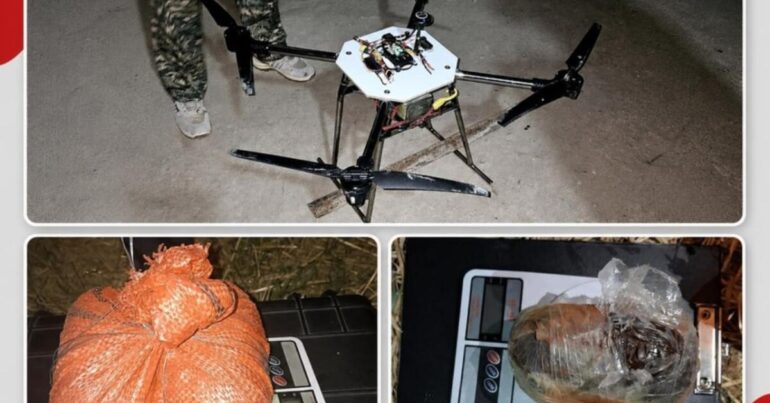

KABUL, AFGHANISTAN – Uzbek media have reported that a drone carrying 2 kilograms and 32 grams of opium was detected and intercepted after crossing into the country from Afghanistan.
According to the Uzbek news outlet Zamin.uz, the drone carrying the opium was flown from Afghanistan toward Uzbekistan’s Surkhandarya region, located near the Amu Darya River.
The outlet added that the operation to detect and intercept the drone was carried out jointly by the State Security Service, border troops, and internal affairs authorities.
According to the report, Uzbekistan’s law enforcement agencies are working to identify those involved in the case.
The outlet said that a criminal case has been opened, and investigators will examine the drone’s launch point, the intended recipient of the narcotics, and any possible accomplices.
Previous reports have also documented attempts to smuggle narcotics from Afghanistan into Uzbekistan.
This comes as the Taliban in Afghanistan continue to claim that they are combating narcotics and preventing their cultivation, production, and trafficking.
In this context, the United Nations Office on Drugs and Crime (UNODC) World Drug Report 2026 states that Afghanistan’s remaining opium stockpiles are expected to last until the end of 2026, despite a 95% decline in production following the Taliban’s ban on poppy cultivation. The report notes that Afghanistan, which accounted for about 80% of global illicit opium production until 2022, has experienced a sharp collapse in output since the ban took effect.
According to the UNODC, poppy cultivation in Afghanistan has fallen from 232,000 hectares in 2022 to 10,200 hectares in 2025, while annual opium production has dropped from 6,200 tons to 296 tons. The agency adds that indicators such as rising prices, declining purity, and reduced seizures suggest significant disruptions in supply, with existing stockpiles temporarily sustaining global demand.
It further warns that no country has yet replaced Afghanistan’s former dominance in opium production, although limited spillover cultivation has been detected in neighboring states.
These findings provide broader context to recent reports of continued narcotics smuggling attempts from Afghanistan into neighboring countries, including drone-based trafficking operations, despite the Taliban’s claims of enforcing a nationwide ban on drugs.
Afghanistan has long been the world’s largest producer of illicit opium, with poppy cultivation becoming deeply rooted over decades because of poverty, limited access to legal markets, insecurity, weak rural infrastructure, and the crop’s high economic value compared with many legal alternatives.
Afghan opiates have historically been trafficked through multiple regional routes to markets in Central Asia, South Asia, the Middle East, Europe, and other destinations. Although the Taliban imposed a nationwide ban on poppy cultivation in 2022, leading to a sharp decline in cultivation according to United Nations assessments, concerns remain over drug stockpiles, trafficking networks, and attempts to smuggle narcotics across Afghanistan’s borders, including into neighboring Central Asian countries.

