

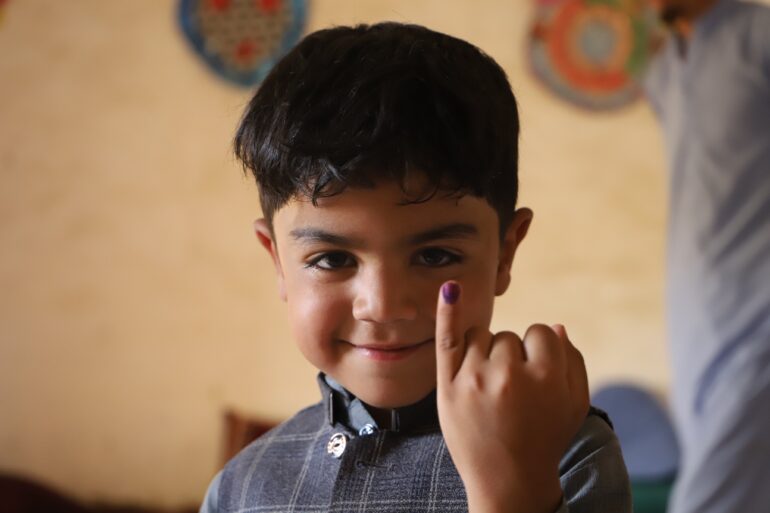

KABUL, AFGHANISTAN – A new polio vaccination campaign will begin on Saturday in Afghanistan’s eastern provinces of Kunar and Nuristan, where wild poliovirus continues to circulate, the Polio Free Afghanistan initiative said.
In a post on X, the initiative said the campaign will cover all of Kunar province and five districts of Nuristan. Children will receive both injectable and oral polio vaccines aimed at strengthening immunity and preventing the spread of the virus.
Polio Free Afghanistan urged families in the two eastern provinces to ensure that children under the age of five receive the vaccine.
Earlier this week, a similar polio vaccination campaign was rolled out in five districts of Helmand province and in Kandahar city.
The new drives come as Afghanistan’s countrywide polio eradication program remains suspended for reasons authorities have not publicly disclosed. Only targeted, province-level campaigns are currently being conducted in selected high-risk areas.
Polio is a highly infectious viral disease that primarily affects children under the age of five. The virus spreads through contaminated food and water or through close contact with an infected person. While many infections cause no symptoms, the disease can lead to irreversible paralysis and, in severe cases, death.
Afghanistan and neighboring Pakistan are the last two countries in the world where wild poliovirus remains endemic. Cross-border transmission has long complicated eradication efforts, with cases frequently reported in provinces along the porous frontier.
At least six cases of wild poliovirus have been confirmed in Afghanistan so far in 2026, according to the World Health Organization (WHO). The cases have been reported in southern and eastern provinces bordering Pakistan. Afghanistan recorded nine cases in 2025.
In addition to human cases, WHO has documented 34 environmental samples positive for poliovirus this year, indicating continued circulation of the virus even in areas where no human cases have been recorded.

