

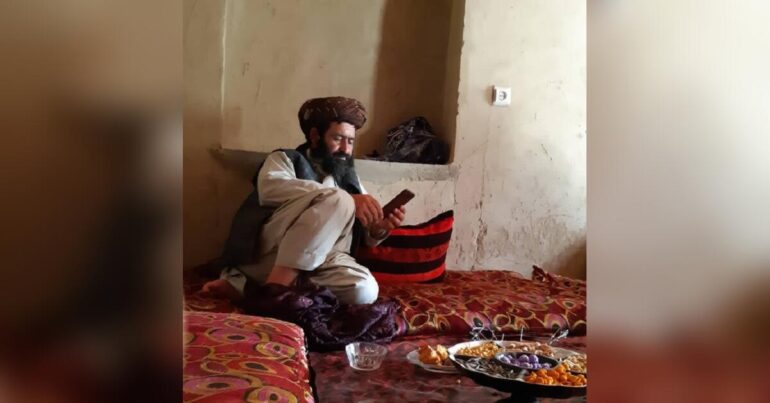

KABUL, AFGHANISTAN – Sources in Faryab province in northern Afghanistan say that the imam of a mosque in Khwaja Namusa district has allegedly killed one of his wives.
According to the sources, the man is identified as Mawlawi Jilan Haqqani, the imam of a mosque known as Imam Mosque in Khwaja Namusa.
A source told KabulNow that the man had four wives and had recently divorced all four of them on the same day before marrying an 18-year-old girl as his fifth wife.
The source added that Jilan Haqqani had recently brought his third wife back to his home, but a few days later allegedly tortured her to death.
The source further said that the body of the 30-year-old woman was found in Jilan Haqqani’s house two days ago, and that the imam claimed his wife had died of natural causes.
According to the source, the Taliban arrested Jilan Haqqani once, but after he stated that he had been at the mosque at the time of his wife’s death, they released him.
Sources say that Mawlawi Jilan Haqqani has close ties with local Taliban authorities, and that “local residents and the victim’s family cannot raise their voices.”
According to the sources, the imam was also planning to marry a 16-year-old girl as his sixth wife.
The reported killing of the woman in Faryab comes amid a broader pattern of deadly violence against women across Afghanistan. During June alone, multiple cases of femicide and gender-based killings were reported from different provinces.
In Nangarhar, a man allegedly killed his wife and daughter and wounded his son in a domestic violence incident. In Balkh, a woman and her husband were reportedly beheaded by her former husband in Mazar-i-Sharif. In Kandahar, a woman allegedly shot and killed her ex-husband after reportedly enduring years of harassment following their divorce. In Kabul, the United Nations confirmed the death of Freshta Emady, a female staff member of the United Nations Population Fund (UNFPA), although the circumstances surrounding her killing remain unclear.
In addition, in Paktika, a man and a woman were killed over allegations of an illicit relationship. In Nangarhar, a female doctor was shot dead by unidentified armed men inside her home, while in Kunar, an eight-year-old girl was mysteriously killed by unknown individuals. These incidents, together with the reported killing in Faryab, underscore the persistent pattern of lethal violence against women and girls in Afghanistan and highlight growing concerns among human rights advocates over impunity, weak legal protections, and the lack of accountability for gender-based violence under Taliban rule.
Afghanistan has long struggled with widespread domestic abuse, which rights groups say has worsened since the Taliban returned to power in 2021. Restrictions on women’s rights, the closure of women’s shelters, and the dismantling of judicial and institutional safeguards have left women and girls increasingly vulnerable to violence.
All women’s protection centers that operated under the previous government have been closed, and access to legal recourse for victims has been limited, further reducing support for women and girls experiencing abuse.
In many parts of Afghanistan, cases of domestic violence remain underreported due to fear, social stigma, and lack of institutional support. Human rights organizations have repeatedly expressed concern over the absence of independent mechanisms for protecting women and handling such cases, especially since the dissolution of specialized support structures, which has further increased vulnerability for women facing abuse.

