

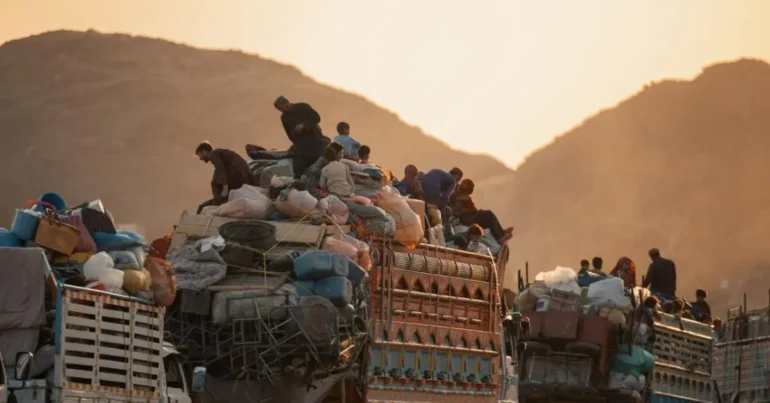

KABUL, AFGHANISTAN – Pakistan’s Prime Minister Shehbaz Sharif, the United Nations High Commissioner for Refugees (UNHCR), and the United Nations Office for the Coordination of Humanitarian Affairs (OCHA) marked World Refugee Day by highlighting the scale of Afghan displacement and return movements, while emphasizing the need for international support for millions of Afghans who have returned to the country amid growing humanitarian and reintegration challenges.
In a message issued on World Refugee Day, Sharif said that 2.4 million Afghan migrants had returned to Afghanistan between September 2023 and June 2026. According to him, the figure includes both voluntary returns and individuals who were deported by the Pakistani government.
Sharif said Pakistan remained committed to the protection and support of refugees and stressed that ensuring the safety and protection of people forced to flee their homes due to conflict, insecurity, and other crises was a shared responsibility of the international community.
He also stated that Pakistan had hosted millions of Afghan refugees for more than four decades since 1979, despite limited resources, providing shelter, care, and opportunities for successive generations. He called on the international community to help ensure hope, peace, and opportunities for the safe and dignified return of displaced and stateless people.
The statement comes as Pakistan has intensified the deportation of Afghan migrants since the Taliban’s return to power. Pakistan began deporting undocumented Afghans in 2023, later invalidated Afghan Citizen Cards (ACC) and Proof of Registration (PoR) cards, and has suspended the issuance and renewal of visas for Afghan nationals.
Thousands of Afghans who fled their country due to fears of Taliban retaliation linked to their professional backgrounds and who hoped to resettle in countries such as the United States, Canada, Australia, and European states are now facing the threat of arrest and forced deportation.
Meanwhile, UNHCR Afghanistan emphasized that support for safe, voluntary, and dignified returns, as well as sustainable reintegration, remains essential for strengthening communities, promoting stability, and supporting long-term recovery. The agency expressed solidarity with returnees and displaced communities and praised their resilience in the face of ongoing challenges.
According to UN figures, 5.4 million migrants have returned to Afghanistan from neighboring countries in less than four years, while another 3.2 million people remain internally displaced.
UN agencies say returnees continue to face serious challenges in accessing employment opportunities, education, healthcare, housing, and safe drinking water, making successful reintegration increasingly difficult.
United Nations Office for the Coordination of Humanitarian Affairs (OCHA) also highlighted the scale of the crisis, noting that more than six million migrants have returned to Afghanistan in less than three years. The agency warned that for many families, returning home marks the beginning of a new struggle, as they often return to communities with limited services and economic opportunities.
According to the International Organization for Migration (IOM), more than six million Afghans have returned or been deported from Pakistan and Iran since September 2023. The large-scale return of migrants, combined with declining international assistance to Afghanistan, has created significant challenges for reintegration and long-term resilience, leaving many returnees facing severe economic and humanitarian hardships.

