
KABUL, AFGHANISTAN – The United Nations Assistance Mission in Afghanistan (UNAMA) has called for ensuring the meaningful participation of women on the occasion of the International Day of Women in Diplomacy.
In a message published on Facebook today (Wednesday, 24 June), UNAMA said that the presence and voices of women are essential for peace and development in Afghanistan.
UNAMA wrote that women play a valuable and influential role in “strengthening international cooperation, advancing peace, and shaping inclusive decision-making.”
The organization added that women diplomats are not merely participants in international relations; they are leaders, peace mediators, and advocates for equality.
The United Nations mission in Afghanistan said that ensuring the meaningful participation of women in public life and decision-making processes remains fundamentally important.
UNAMA emphasized that equal opportunities should be provided for Afghan women and girls so that they can learn, lead, and play an effective role in all sectors of society, including diplomacy and public service.
The UN mission stated that the full and meaningful participation of women is a prerequisite for achieving stronger, more resilient, and more peaceful societies.
UNAMA also described the “presence and voices of women” as essential for achieving lasting peace, inclusive development, and a brighter future for the country.
This comes as the Taliban, following their return to power in Afghanistan, have barred women from working in public sectors.
Currently, no women hold positions in political, legal, or senior management roles within government institutions or the private sector.
The International Day of Women in Diplomacy, observed annually on 24 June, was established by the United Nations to recognize the vital contributions of women in diplomacy, peacebuilding, conflict resolution, and international cooperation. The day also seeks to address the persistent underrepresentation of women in foreign policy and decision-making roles and to promote equal participation in leadership at all levels.
For Afghanistan, the occasion carries particular significance. While Afghan women once served as diplomats, ambassadors, ministers, and representatives in international forums, many have been excluded from public and political life since the Taliban’s return to power in 2021.
On a day dedicated to celebrating women’s leadership in diplomacy, Afghan women remain largely absent from diplomatic institutions and government decision-making processes. Their situation highlights the widening gap between global commitments to women’s participation and the realities faced by millions of Afghan women and girls, many of whom continue to face restrictions on education, employment, and public engagement.
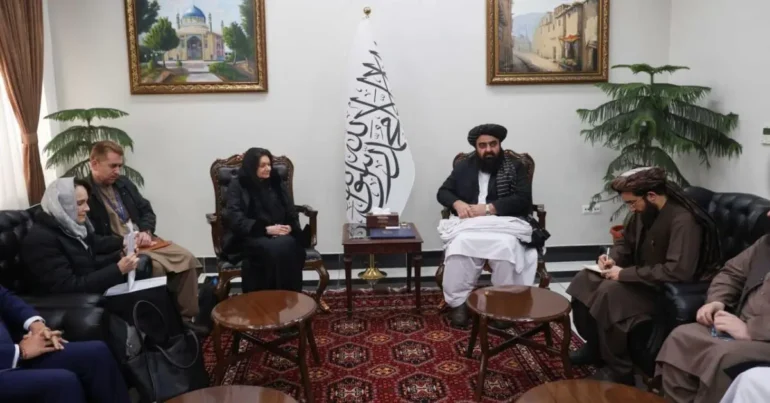
Although the Taliban have excluded Afghan women from diplomacy and leadership roles, United Nations and European Union missions in Kabul have been led by women over the past five years.
Afghanistan under Taliban rule continues to face one of the world’s gravest humanitarian and human rights crises. Women and girls remain largely barred from public life, including secondary and higher education and most forms of employment. Reports of arbitrary detentions, mysterious killings, and other abuses persist. Nearly half of the country’s population, mostly women and children, depends on international aid for survival.