

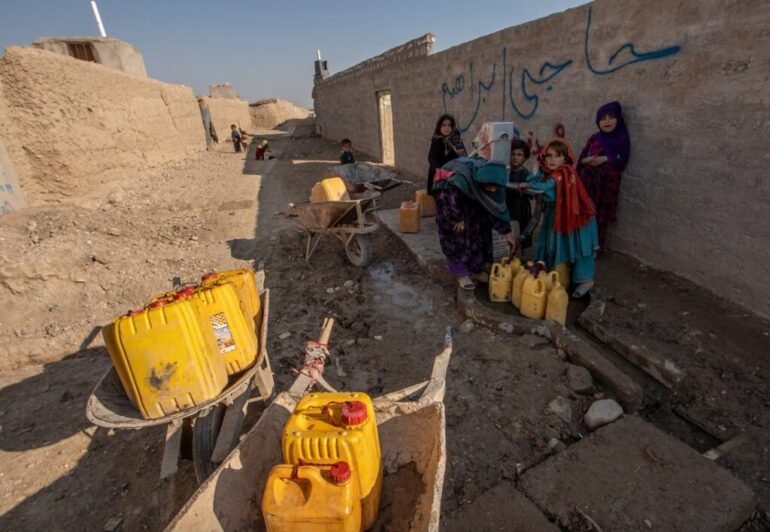

KABUL, AFGHANISTAN – The United Nations Office for the Coordination of Humanitarian Affairs (OCHA) says an estimated 16 million people in Afghanistan, about one in three, require access to clean water and sanitation assistance in 2026.
In a statement posted on X on Monday, OCHA stated that water scarcity is forcing families to search for safe water, exposing children to increased health risks and leaving communities struggling to cope.
The agency quoted residents in the Yakawalang district of central Bamyan province as saying, “Life here is becoming impossible. There is no water, and we are struggling even to secure drinking water.”
Afghanistan is grappling with one of the world’s most severe water crises, driven by consecutive years of drought, poor infrastructure, rapid population growth, and the intensifying effects of climate change.
The lack of clean water has become a major driver of disease outbreaks and food insecurity, UN agencies say. Decades of conflict and weak governance have damaged water infrastructure, while climate change has intensified droughts and reduced mountain snowfall that feeds the country’s rivers.
The crisis has severely affected agriculture, the main source of income for the majority of Afghan families, reducing crop yields and increasing pressure on livestock. In some areas, shrinking water resources have forced families to leave their homes in search of better conditions.
The situation is particularly critical in the capital, Kabul, home to more than five million residents. Experts have long warned that the city could become the first modern capital to effectively run out of water by 2030 if current trends continue. Underground aquifers have declined by around 30 meters over the past decade, as extraction rates far exceed natural replenishment amid unregulated drilling and population pressures.
Afghanistan’s broader humanitarian crisis has worsened since the Taliban’s return to power in 2021, with nearly half the population dependent on humanitarian aid. At the same time, declining international funding has limited the ability of aid agencies to respond to growing needs. The 2026 Humanitarian Needs and Response Plan remains significantly underfunded.
Humanitarian organizations are calling for greater international support to rehabilitate water infrastructure, expand sanitation systems, improve water management and build community resilience against recurring droughts and climate impacts.

