

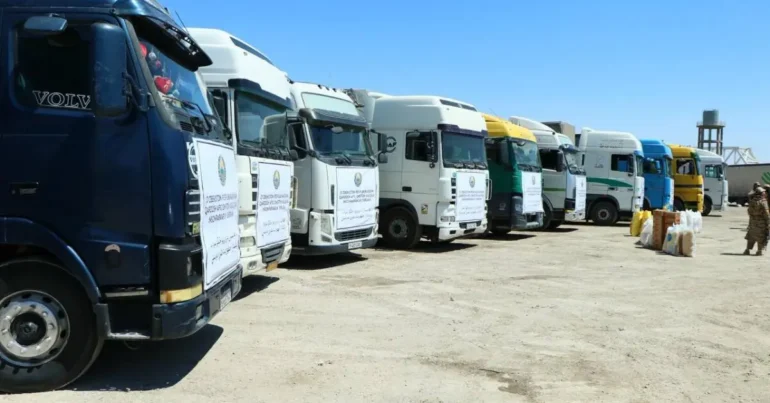

KABUL, AFGHANISTAN – Uzbekistan and Ireland have provided humanitarian assistance to Afghanistan, supporting people in need amid ongoing humanitarian challenges in the country.
The office of the Taliban governor in Balkh province says that Uzbekistan has sent 320 tons of humanitarian assistance to Afghanistan ahead of Eid al-Adha.
According to the office, the aid was handed over on (Monday, May 25) to Taliban officials at the Hairatan border crossing. The shipment includes flour, oil, rice, beef, macaroni, sugar, and chickpeas.
Said the Special Representative of Uzbekistan for Afghanistan Affairs, Ismatullah Irgashev, this assistance reflects goodwill, friendship, and brotherhood between Uzbekistan and Afghanistan. He further stated that his country’s support demonstrates its commitment to Afghanistan.
The deputy governor of the Taliban in Balkh expressed gratitude for Uzbekistan’s assistance, stating that the aid will be transparently distributed to people in need in northern Afghanistan.
In a separate development, the United Nations Office for the Coordination of Humanitarian Affairs (OCHA) announced that Ireland has contributed to Afghanistan’s humanitarian efforts through the UN-managed fund.
OCHA said today (Tuesday, May 26) on X that Ireland has donated three million euros to the Afghanistan Humanitarian Fund.
OCHA welcomed the contribution, stating that the support will strengthen humanitarian efforts and help people in need across Afghanistan.
Afghanistan is currently facing one of the world’s worst humanitarian crises. According to the United Nations, more than 23 million people—over half the population—require food aid, while aid cuts, donor fatigue, and political isolation have forced the closure of over 400 health facilities.
The UN has appealed for $1.7 billion to respond to the crisis; however, according to its reports, less than 15 percent of this amount has been funded so far.
Malnutrition continues to be a major concern. The World Food Programme estimates that about 3.7 million children and 1.2 million pregnant and breastfeeding women will face acute malnutrition in 2026.
The growing involvement of international partners such as Uzbekistan and Ireland highlights continued global engagement with Afghanistan’s humanitarian situation.
UN agencies and humanitarian organizations have repeatedly warned that funding gaps threaten life-saving operations across the country. They have called for increased and sustained international support, particularly for communities affected by natural disasters and for families returning to areas struggling with food shortages and harsh winter conditions.

